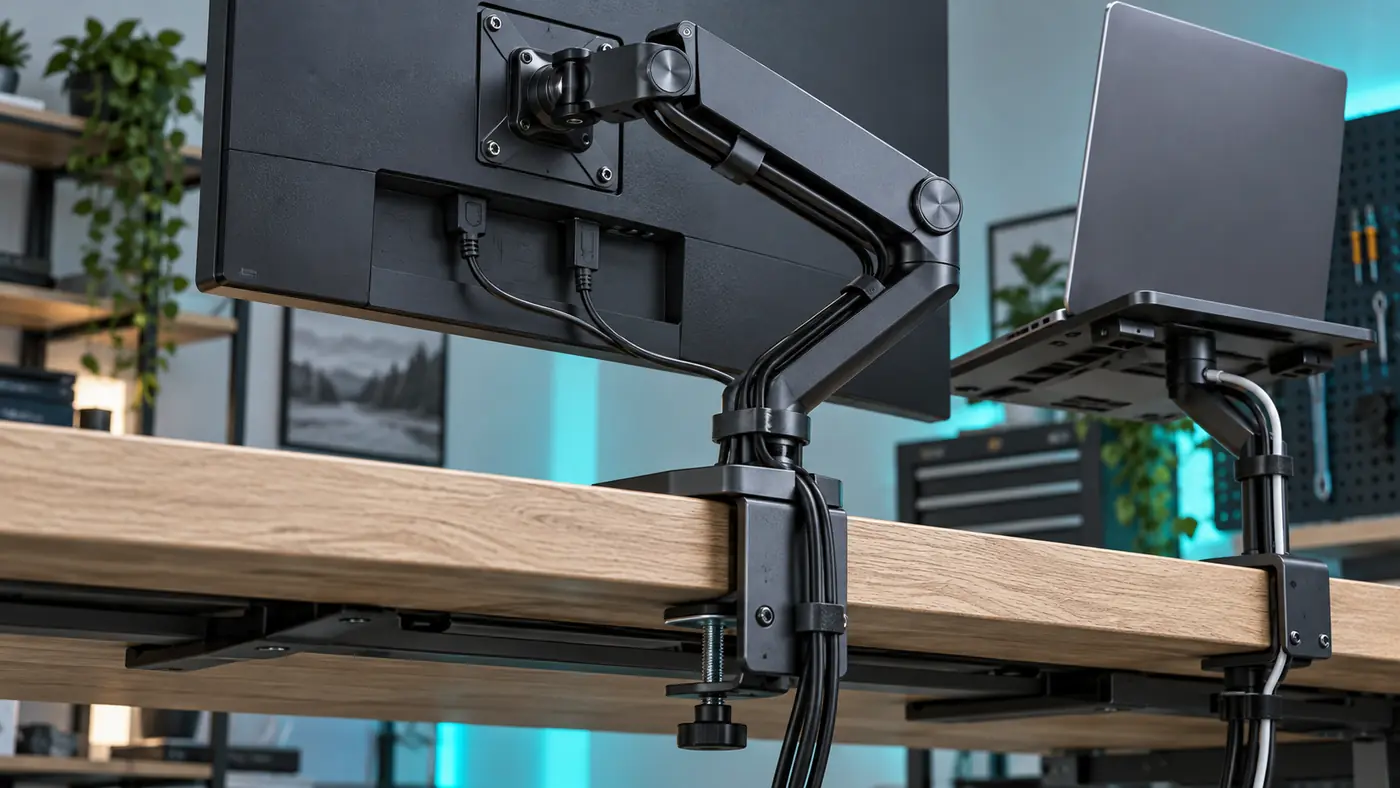
Read the complete instructions first
Identify installation order, required tools, fastener choices, capacity ranges, orientation limits, and warnings before unpacking every small part. Similar-looking bolts can have different lengths, and a sequence may be necessary to keep a plate or clamp accessible.
For the specific checkpoint “read the complete instructions first,” Support the loaded device while making one documented adjustment in a small increment. Release carefully, watch the joint settle, and test the same axis at the middle and ends of its planned range before touching another mechanism. Calibration is a sequence of observations, not a general instruction to tighten every visible screw.
The acceptance note for “read the complete instructions first” should remain separate from every other checkpoint. Write down the installed device, attachment hardware, adjustment tool, order of axes, and positions that hold without drift. Pause for an uncertain latch, wrong fastener engagement, abrupt spring motion, grinding, persistent sag, or movement that needs enough force to disturb the desk. Resolve the cause before adding cables or covers.
Stage parts in functional groups
Keep desk hardware, monitor attachment, laptop-tray pieces, cable guides, and adjustment tools in separate trays. Compare them with the parts list. A missing washer discovered while a screen is supported in midair creates avoidable pressure to improvise.
For the specific checkpoint “stage parts in functional groups,” Support the loaded device while making one documented adjustment in a small increment. Release carefully, watch the joint settle, and test the same axis at the middle and ends of its planned range before touching another mechanism. Calibration is a sequence of observations, not a general instruction to tighten every visible screw.
The acceptance note for “stage parts in functional groups” should remain separate from every other checkpoint. Write down the installed device, attachment hardware, adjustment tool, order of axes, and positions that hold without drift. Pause for an uncertain latch, wrong fastener engagement, abrupt spring motion, grinding, persistent sag, or movement that needs enough force to disturb the desk. Resolve the cause before adding cables or covers.
Prepare a clear lifting route
Remove cups, keyboards, and loose accessories. Plan where the screen will rest safely while its plate is attached and how it reaches the arm. Use assistance when size, shape, or weight makes a controlled lift doubtful, even if the numeric mass is within capacity.
For the specific checkpoint “prepare a clear lifting route,” Support the loaded device while making one documented adjustment in a small increment. Release carefully, watch the joint settle, and test the same axis at the middle and ends of its planned range before touching another mechanism. Calibration is a sequence of observations, not a general instruction to tighten every visible screw.
The acceptance note for “prepare a clear lifting route” should remain separate from every other checkpoint. Write down the installed device, attachment hardware, adjustment tool, order of axes, and positions that hold without drift. Pause for an uncertain latch, wrong fastener engagement, abrupt spring motion, grinding, persistent sag, or movement that needs enough force to disturb the desk. Resolve the cause before adding cables or covers.
Seat the base before adding equipment
Install the clamp or grommet assembly squarely, verify contact, and check that its pole or base does not rotate under gentle hand pressure. Do not use an attached screen as a lever to straighten a poorly seated mount.
For the specific checkpoint “seat the base before adding equipment,” Support the loaded device while making one documented adjustment in a small increment. Release carefully, watch the joint settle, and test the same axis at the middle and ends of its planned range before touching another mechanism. Calibration is a sequence of observations, not a general instruction to tighten every visible screw.
The acceptance note for “seat the base before adding equipment” should remain separate from every other checkpoint. Write down the installed device, attachment hardware, adjustment tool, order of axes, and positions that hold without drift. Pause for an uncertain latch, wrong fastener engagement, abrupt spring motion, grinding, persistent sag, or movement that needs enough force to disturb the desk. Resolve the cause before adding cables or covers.
Use documented fasteners and spacers
Match the display attachment pattern and thread requirements in authoritative instructions. A screw that is too long can damage equipment; one that is too short may not engage adequately. Spacers should solve an intended recess or shape, not conceal a mismatch.
For the specific checkpoint “use documented fasteners and spacers,” Support the loaded device while making one documented adjustment in a small increment. Release carefully, watch the joint settle, and test the same axis at the middle and ends of its planned range before touching another mechanism. Calibration is a sequence of observations, not a general instruction to tighten every visible screw.
The acceptance note for “use documented fasteners and spacers” should remain separate from every other checkpoint. Write down the installed device, attachment hardware, adjustment tool, order of axes, and positions that hold without drift. Pause for an uncertain latch, wrong fastener engagement, abrupt spring motion, grinding, persistent sag, or movement that needs enough force to disturb the desk. Resolve the cause before adding cables or covers.
Load the mechanism in a controlled state
Support the monitor or tray while engaging quick-release features and safety locks. Confirm each latch visually and physically as directed. Keep hands clear of spring-assisted joints that can move quickly before the rated load is attached.
For the specific checkpoint “load the mechanism in a controlled state,” Support the loaded device while making one documented adjustment in a small increment. Release carefully, watch the joint settle, and test the same axis at the middle and ends of its planned range before touching another mechanism. Calibration is a sequence of observations, not a general instruction to tighten every visible screw.
The acceptance note for “load the mechanism in a controlled state” should remain separate from every other checkpoint. Write down the installed device, attachment hardware, adjustment tool, order of axes, and positions that hold without drift. Pause for an uncertain latch, wrong fastener engagement, abrupt spring motion, grinding, persistent sag, or movement that needs enough force to disturb the desk. Resolve the cause before adding cables or covers.
Balance vertical movement first
With the actual load supported, adjust the lift mechanism in small increments until the device holds at useful heights. Test near the middle and ends of the intended range. A setting that holds only one location may still be unbalanced.
For the specific checkpoint “balance vertical movement first,” Support the loaded device while making one documented adjustment in a small increment. Release carefully, watch the joint settle, and test the same axis at the middle and ends of its planned range before touching another mechanism. Calibration is a sequence of observations, not a general instruction to tighten every visible screw.
The acceptance note for “balance vertical movement first” should remain separate from every other checkpoint. Write down the installed device, attachment hardware, adjustment tool, order of axes, and positions that hold without drift. Pause for an uncertain latch, wrong fastener engagement, abrupt spring motion, grinding, persistent sag, or movement that needs enough force to disturb the desk. Resolve the cause before adding cables or covers.
Tune tilt and rotation separately
After vertical balance, address screen tilt, tray level, and lateral drift. Make one small change, release carefully, and observe. Over-tightening every joint creates a rigid assembly that transmits repositioning force into the desk.
For the specific checkpoint “tune tilt and rotation separately,” Support the loaded device while making one documented adjustment in a small increment. Release carefully, watch the joint settle, and test the same axis at the middle and ends of its planned range before touching another mechanism. Calibration is a sequence of observations, not a general instruction to tighten every visible screw.
The acceptance note for “tune tilt and rotation separately” should remain separate from every other checkpoint. Write down the installed device, attachment hardware, adjustment tool, order of axes, and positions that hold without drift. Pause for an uncertain latch, wrong fastener engagement, abrupt spring motion, grinding, persistent sag, or movement that needs enough force to disturb the desk. Resolve the cause before adding cables or covers.
Install cables before final judgment
Cables add spring and drag forces. Complete the motion-aware routing, then recalibrate if needed. Do not treat cable pull as a reason to exceed adjustment guidance; correct the path and service loops first.
For the specific checkpoint “install cables before final judgment,” Support the loaded device while making one documented adjustment in a small increment. Release carefully, watch the joint settle, and test the same axis at the middle and ends of its planned range before touching another mechanism. Calibration is a sequence of observations, not a general instruction to tighten every visible screw.
The acceptance note for “install cables before final judgment” should remain separate from every other checkpoint. Write down the installed device, attachment hardware, adjustment tool, order of axes, and positions that hold without drift. Pause for an uncertain latch, wrong fastener engagement, abrupt spring motion, grinding, persistent sag, or movement that needs enough force to disturb the desk. Resolve the cause before adding cables or covers.
Run a commissioning cycle
Move from parked to working and meeting positions several times, checking locks, clearances, hold, vibration, and cable behavior. Reinspect fasteners after initial use according to instructions. Save the correct tool and a brief configuration note for future checks.
For the specific checkpoint “run a commissioning cycle,” Support the loaded device while making one documented adjustment in a small increment. Release carefully, watch the joint settle, and test the same axis at the middle and ends of its planned range before touching another mechanism. Calibration is a sequence of observations, not a general instruction to tighten every visible screw.
The acceptance note for “run a commissioning cycle” should remain separate from every other checkpoint. Write down the installed device, attachment hardware, adjustment tool, order of axes, and positions that hold without drift. Pause for an uncertain latch, wrong fastener engagement, abrupt spring motion, grinding, persistent sag, or movement that needs enough force to disturb the desk. Resolve the cause before adding cables or covers.
Close the guide with an acceptance record
Commissioning is complete when joints hold, devices remain secure, clearances persist, and adjustment does not require harmful force. Keep the record close to this guide’s subject and compare it with the current equipment whenever the workstation changes.
Save the correct tools and configuration record. Future maintenance should begin from evidence instead of rediscovering the installation under pressure. Date the conclusion and identify any unresolved point plainly; an acceptance record is a working boundary, never a product certification.