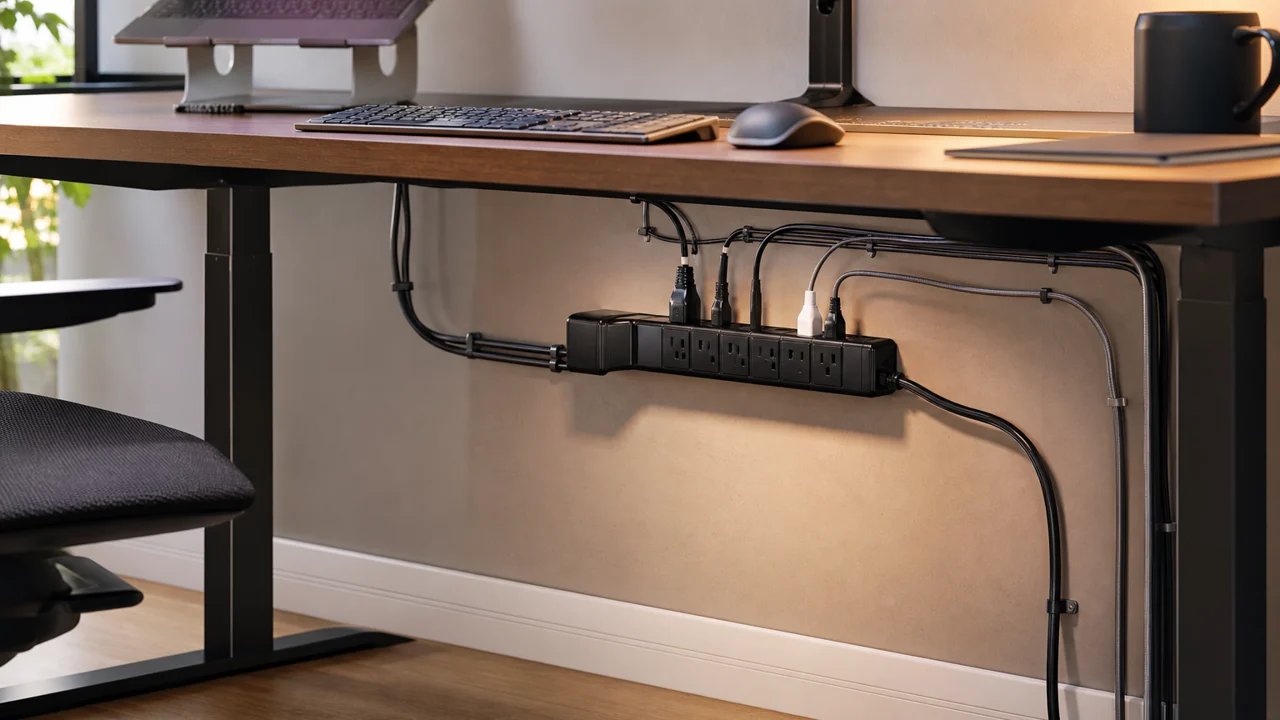
A cord placement should begin with the devices on the desk, not the cheapest strip in the drawer. Monitors, docks, chargers, lamps, printers, and speakers all have different plug shapes and power habits. A good office setup gives every device a sensible place to connect without forcing cords across walkways or hiding overloaded strips behind furniture.
This page is editorial guidance, not electrical advice. It focuses on visible product-selection details, safer habits, and common buying mistakes. If there are damaged outlets, frequent breaker trips, warm plugs, or wiring concerns, involve a qualified professional instead of trying to solve the problem with another adapter.
Start with the equipment list
For office surge protectors and power strips, this check keeps the purchase grounded in real use. Look at plug spacing, cord direction, desk legs, floor paths, cleaning access, and whether the equipment should stay on during an outage. The right answer for a printer corner may be different from the right answer for a laptop docking station.
A practical example is a small office desk with two monitors, a dock, laptop charger, desk lamp, phone charger, and occasional label printer. The listed outlet count may look generous, but two bulky adapters can block neighboring sockets. That is why usable spacing matters more than the number on the package.
- Do not daisy-chain power strips.
- Keep strips visible enough to inspect and reset.
- Match cord length to placement instead of stretching across a walkway.
Count usable outlets, not advertised outlets
For office surge protectors and power strips, this check keeps the purchase grounded in real use. Look at plug spacing, cord direction, desk legs, floor paths, cleaning access, and whether the equipment should stay on during an outage. The right answer for a printer corner may be different from the right answer for a laptop docking station.
A practical example is a small office desk with two monitors, a dock, laptop charger, desk lamp, phone charger, and occasional label printer. The listed outlet count may look generous, but two bulky adapters can block neighboring sockets. That is why usable spacing matters more than the number on the package.
- Do not daisy-chain power strips.
- Keep strips visible enough to inspect and reset.
- Match cord length to placement instead of stretching across a walkway.
Place the strip before cable clutter starts
For office surge protectors and power strips, this check keeps the purchase grounded in real use. Look at plug spacing, cord direction, desk legs, floor paths, cleaning access, and whether the equipment should stay on during an outage. The right answer for a printer corner may be different from the right answer for a laptop docking station.
A practical example is a small office desk with two monitors, a dock, laptop charger, desk lamp, phone charger, and occasional label printer. The listed outlet count may look generous, but two bulky adapters can block neighboring sockets. That is why usable spacing matters more than the number on the package.
- Do not daisy-chain power strips.
- Keep strips visible enough to inspect and reset.
- Match cord length to placement instead of stretching across a walkway.
Know the limits of surge protection
For office surge protectors and power strips, this check keeps the purchase grounded in real use. Look at plug spacing, cord direction, desk legs, floor paths, cleaning access, and whether the equipment should stay on during an outage. The right answer for a printer corner may be different from the right answer for a laptop docking station.
A practical example is a small office desk with two monitors, a dock, laptop charger, desk lamp, phone charger, and occasional label printer. The listed outlet count may look generous, but two bulky adapters can block neighboring sockets. That is why usable spacing matters more than the number on the package.
- Do not daisy-chain power strips.
- Keep strips visible enough to inspect and reset.
- Match cord length to placement instead of stretching across a walkway.
Check heat, age, and wear
For office surge protectors and power strips, this check keeps the purchase grounded in real use. Look at plug spacing, cord direction, desk legs, floor paths, cleaning access, and whether the equipment should stay on during an outage. The right answer for a printer corner may be different from the right answer for a laptop docking station.
A practical example is a small office desk with two monitors, a dock, laptop charger, desk lamp, phone charger, and occasional label printer. The listed outlet count may look generous, but two bulky adapters can block neighboring sockets. That is why usable spacing matters more than the number on the package.
- Do not daisy-chain power strips.
- Keep strips visible enough to inspect and reset.
- Match cord length to placement instead of stretching across a walkway.
Use a simple buying framework
For office surge protectors and power strips, this check keeps the purchase grounded in real use. Look at plug spacing, cord direction, desk legs, floor paths, cleaning access, and whether the equipment should stay on during an outage. The right answer for a printer corner may be different from the right answer for a laptop docking station.
A practical example is a small office desk with two monitors, a dock, laptop charger, desk lamp, phone charger, and occasional label printer. The listed outlet count may look generous, but two bulky adapters can block neighboring sockets. That is why usable spacing matters more than the number on the package.
- Do not daisy-chain power strips.
- Keep strips visible enough to inspect and reset.
- Match cord length to placement instead of stretching across a walkway.
FAQ
Should every office device use a surge protector?
Sensitive electronics often benefit from surge protection, but high-draw devices and wiring concerns need manufacturer guidance and safe circuit planning.
When is a UPS better?
A UPS is useful when equipment needs time to shut down safely or stay on briefly during an outage.
Related guides
Outlet spacingJoule ratingsCord placementUPS vs stripMaintenanceBuying mistakesPrevious cloud article: conference speakerphone guide