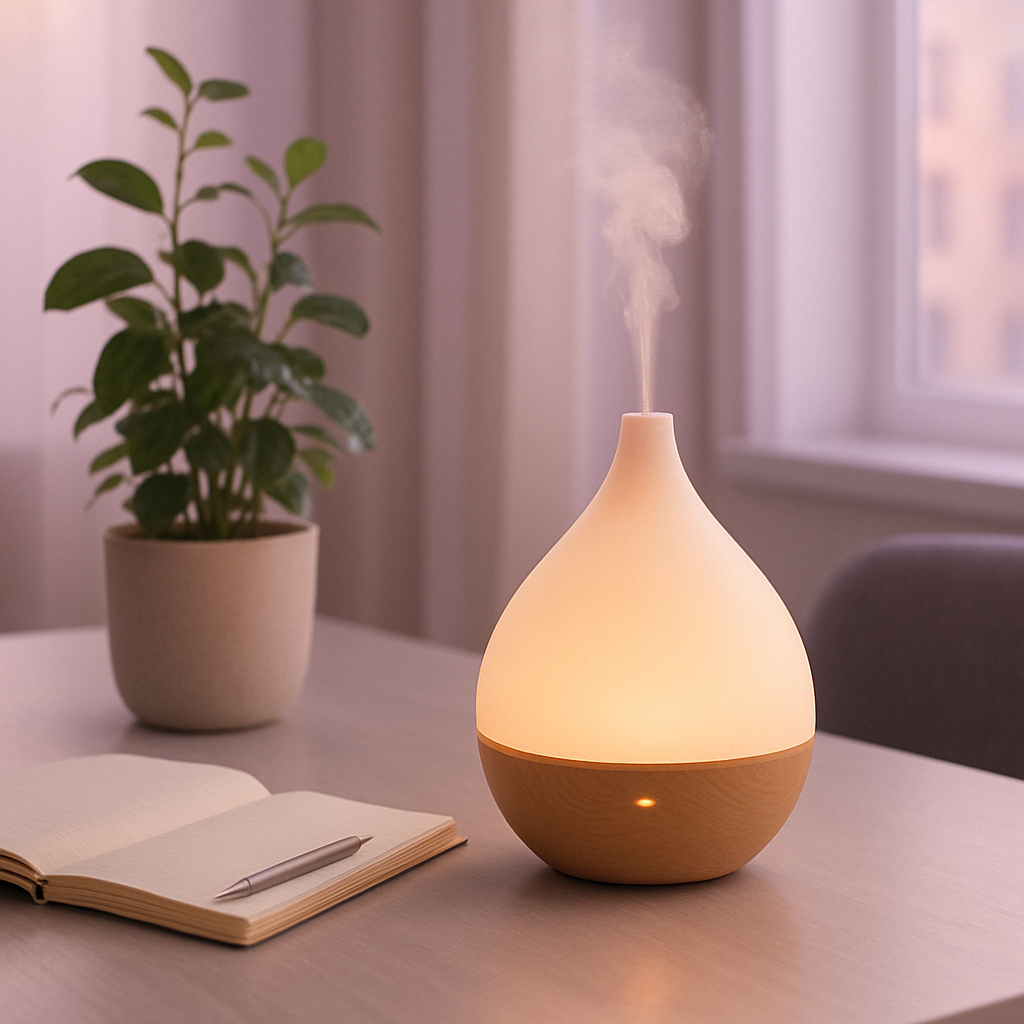
Start with scent strength and shared-room comfort
An office diffuser should be gentle enough that people nearby do not feel trapped by the scent. Strong aroma can feel pleasant to one person and distracting to another. Choose output levels, room size, and scent type with coworkers and visitors in mind.
For product picks after the policy and comfort check, use the LeStallion guide to 7 Best Essential-Oil Diffusers for Office Aromatherapy.
Check workplace policy before fragrance
Some offices limit fragrance because of allergies, asthma, migraines, lease rules, or shared-air concerns. A diffuser that is fine in a home office may be inappropriate in a shared workplace. Policy and courtesy come before product features.
Keep this choice tied to scent courtesy, cleaning, and safe placement.
Decide between ultrasonic and waterless options
Ultrasonic diffusers use water and need cleaning. Waterless models may be simpler but can be more intense. The best choice depends on desk safety, cleaning tolerance, scent control, and whether moisture near electronics is acceptable.
Keep this choice tied to scent courtesy, cleaning, and safe placement.
Use timers to avoid all-day scent fatigue
Timer settings are valuable because scent blindness and fatigue happen quickly. Short sessions can make a space feel fresh without overwhelming the room. Automatic shutoff also reduces babysitting.
Keep this choice tied to scent courtesy, cleaning, and safe placement.
Plan cleaning before adding oils
Essential oils leave residue, and water tanks can need regular rinsing. If cleaning is awkward, the diffuser will become unpleasant or unused. Office models should be easy to empty, wipe, and dry.
Keep this choice tied to scent courtesy, cleaning, and safe placement.
Place the diffuser away from electronics and people’s faces
Diffusers should not blow directly into a keyboard, laptop, paperwork, or coworker. Good placement lets aroma disperse softly without becoming a direct stream.
Keep this choice tied to scent courtesy, cleaning, and safe placement.
A coworker-first test before buying
Before choosing an office diffuser, ask where the scent will travel. A private office, reception desk, therapy room, coworking area, and home workstation all create different expectations. If other people cannot easily leave the area, scent should be subtle or avoided. Courtesy is part of the buying decision.
Test with the mildest scent and shortest timer first. If the room still feels fresh after the session ends, the diffuser is strong enough. If people notice it from the hallway, the setting may be too high for office use.
Also think about storage. Oils should be kept upright, away from heat, and out of reach of children or pets in home offices. Spills can stain surfaces, so a tray or dedicated shelf can be smarter than placing bottles directly on a desk.
Common mistakes with office aromatherapy
The biggest mistake is assuming natural means universally comfortable. Essential oils can still bother sensitive people. Another mistake is running a diffuser all day. Short, controlled sessions usually feel more professional and reduce scent fatigue.
Do not ignore cleaning. Residue, stale water, and mixed oils can make a diffuser smell muddy. If the model is difficult to clean, choose something simpler or skip the diffuser for that workspace.
The best office diffuser is quiet, subtle, easy to clean, safely placed, and acceptable to the people who share the air.
One-week evaluation plan
Run the diffuser for short sessions at the same time each day. Note whether scent lingers too long, whether coworkers comment, and whether the device is easy to empty and wipe down. If the routine feels fussy after one week, it is unlikely to improve later.
Check surfaces around the diffuser. Oils and mist should not settle on electronics, papers, or polished furniture. If residue appears, move the unit or reduce output.
At the end of the week, keep only the setup that feels calm, clean, and considerate.
Deep-dive subpages
How to keep office aromatherapy professional
A diffuser should never become the main character in the room. The most professional setups are quiet, short, and easy to stop. Start by deciding whether fragrance belongs in the space at all. Private offices, treatment rooms, studios, and home desks may allow more flexibility. Shared open offices, customer counters, classrooms, and medical-adjacent spaces need more caution because people cannot always avoid the scent.
Use the smallest effective amount of oil and the shortest useful session. If a scent feels obvious at the doorway, it is probably too strong for a workplace. A gentle background note is easier to tolerate than a fragrance that announces itself before people sit down. This is especially true during meetings, interviews, and client visits.
Keep oils organized and labeled. Mixing bottles, leaving caps loose, or storing oils in heat can create spills and stale smells. A small tray, simple timer, and written cleaning habit can make the difference between a pleasant accessory and a messy desk object.
When a diffuser is the wrong answer
Skip the diffuser if coworkers report sensitivity, if policy is unclear, or if ventilation is poor. A plant, open window, cleaner desk routine, or fragrance-free air purifier may be a better fit. Aromatherapy should add comfort only when it does not create a problem for someone else.
Also be careful in pet-friendly home offices. Some oils are not appropriate around pets, children, or certain health conditions. Product pages rarely handle those personal details, so the buyer must check the environment before using any scent.
The best office diffuser is not the strongest or most decorative model. It is the one that can run briefly, clean easily, sit safely, and stay respectful of shared air.
As a final note, write down the exact oil, drop count, timer length, and room reaction after the first few uses. That record prevents accidental overuse and helps teams repeat only the settings that felt respectful, clean, and comfortable.
For shared spaces, add one more check: ask whether anyone nearby noticed the scent before mentioning the diffuser. Unprompted reactions are useful because they show whether the aroma is truly subtle or already too present for routine office use.
Related desk comfort page
This cluster follows the previous Render guide on desktop humidifiers for dry offices. For product-level diffuser picks, return to the LeStallion essential-oil diffuser guide.