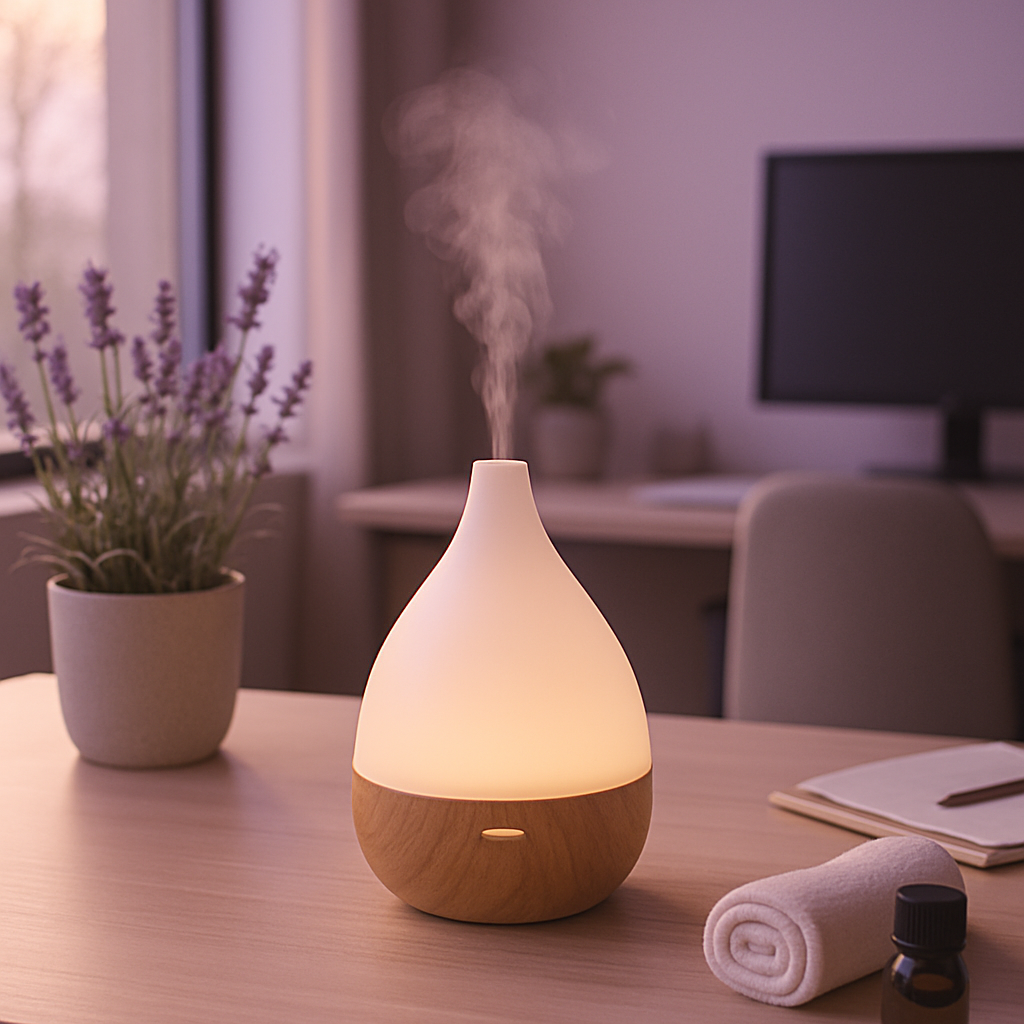
Cleaning Care: office aroma check 1
Cleaning Care matters because diffusers affect shared air. A useful office diffuser should create a gentle atmosphere without forcing fragrance on coworkers, visitors, clients, or family members in a home office.
For best essential-oil diffusers, define the room and policy first. This page supports the main office aromatherapy guide and gives one top contextual path to the LeStallion product shortlist.
Start with low output, short sessions, and clear placement away from electronics, paperwork, and direct breathing zones.
- Check fragrance policy and sensitivities.
- Use timer settings instead of all-day output.
- Clean residue before changing oils.
Cleaning Care: office aroma check 2
Office aromatherapy works best when it is quiet, subtle, and easy to stop. Strong fragrance can make a space feel less professional, especially in reception areas or shared rooms. A diffuser should support the workday rather than becoming the first thing people notice.
Cleaning and oil handling are part of the decision. Oils can leave residue, and mixed scents can become unpleasant. Choose a model that is simple to empty, wipe, and dry, especially if several people may use it.
Placement should protect electronics and furniture. Keep mist or oil vapor away from laptops, keyboards, monitors, papers, and polished surfaces.
Cleaning Care: office aroma check 3
Office aromatherapy works best when it is quiet, subtle, and easy to stop. Strong fragrance can make a space feel less professional, especially in reception areas or shared rooms. A diffuser should support the workday rather than becoming the first thing people notice.
Cleaning and oil handling are part of the decision. Oils can leave residue, and mixed scents can become unpleasant. Choose a model that is simple to empty, wipe, and dry, especially if several people may use it.
Placement should protect electronics and furniture. Keep mist or oil vapor away from laptops, keyboards, monitors, papers, and polished surfaces.
Cleaning Care: office aroma check 4
Office aromatherapy works best when it is quiet, subtle, and easy to stop. Strong fragrance can make a space feel less professional, especially in reception areas or shared rooms. A diffuser should support the workday rather than becoming the first thing people notice.
Cleaning and oil handling are part of the decision. Oils can leave residue, and mixed scents can become unpleasant. Choose a model that is simple to empty, wipe, and dry, especially if several people may use it.
Placement should protect electronics and furniture. Keep mist or oil vapor away from laptops, keyboards, monitors, papers, and polished surfaces.
Cleaning Care: office aroma check 5
Office aromatherapy works best when it is quiet, subtle, and easy to stop. Strong fragrance can make a space feel less professional, especially in reception areas or shared rooms. A diffuser should support the workday rather than becoming the first thing people notice.
Cleaning and oil handling are part of the decision. Oils can leave residue, and mixed scents can become unpleasant. Choose a model that is simple to empty, wipe, and dry, especially if several people may use it.
Placement should protect electronics and furniture. Keep mist or oil vapor away from laptops, keyboards, monitors, papers, and polished surfaces.
Cleaning Care: office aroma check 6
Office aromatherapy works best when it is quiet, subtle, and easy to stop. Strong fragrance can make a space feel less professional, especially in reception areas or shared rooms. A diffuser should support the workday rather than becoming the first thing people notice.
Cleaning and oil handling are part of the decision. Oils can leave residue, and mixed scents can become unpleasant. Choose a model that is simple to empty, wipe, and dry, especially if several people may use it.
Placement should protect electronics and furniture. Keep mist or oil vapor away from laptops, keyboards, monitors, papers, and polished surfaces.
Practical buying notes for cleaning care
Write down the room type, ventilation, nearby desks, and the strongest acceptable scent level before comparing products. This keeps the shortlist focused on courtesy instead of decorative features.
Check whether the diffuser uses water, pads, nebulizing technology, or cartridges. Each style changes cleaning, intensity, and operating cost. Office buyers should favor predictable output and easy shutoff.
After purchase, test one oil at a time. Blending scents too early makes it harder to know what people actually tolerate.
How this affects the shortlist
The best shortlist should prioritize timer control, quiet operation, easy cleaning, and low output settings. For shared spaces, subtlety is a feature. For private spaces, maintenance still matters.
Look for repeated review patterns about leaks, difficult cleaning, overpowering scent, weak timers, or noisy operation. Those daily-use issues matter more than a pretty shell.
A good office diffuser should be easy to forget in the best way: calm, clean, and never intrusive.
Extra checks before ordering
Map the room before comparing models. Mark nearby desks, doors, vents, windows, visitors, pets, and electronics. This shows whether fragrance will stay near the intended area or drift into places where it may bother people. If scent control seems uncertain, choose a model with lower output, stronger timer control, or no diffuser at all.
Think about oil handling as part of the product. Water tanks, pads, cartridges, and nebulizers all change cleaning and intensity. A waterless model may feel convenient but can release a stronger aroma. An ultrasonic model may feel softer but needs water care. The right style depends on the user’s cleaning tolerance and the room’s fragrance rules.
Finally, choose oils cautiously. Start with one mild scent, use fewer drops than the maximum suggestion, and avoid blending until the workspace has proved it can tolerate fragrance comfortably.
Daily-use signs that the fit is right
The right diffuser routine feels almost invisible. It starts easily, shuts off predictably, leaves no oily residue, and does not require people to comment on the smell. It should not compete with coffee, food, cleaning products, perfumes, or coworker preferences.
After each use, check the desk and air. If surfaces feel oily, the scent lingers too long, or the room feels heavy, reduce output or move the unit. If cleaning is skipped because the parts are awkward, the model is not practical for that office.
Good office aromatherapy is mostly restraint. A small, controlled, clean setup is better than a dramatic diffuser that makes the room harder to share.
As a final note, write down the exact oil, drop count, timer length, and room reaction after the first few uses. That record prevents accidental overuse and helps teams repeat only the settings that felt respectful, clean, and comfortable.
For shared spaces, add one more check: ask whether anyone nearby noticed the scent before mentioning the diffuser. Unprompted reactions are useful because they show whether the aroma is truly subtle or already too present for routine office use.
Related reading
Return to the main diffuser guide, compare products on LeStallion, or review the previous cloud page on desktop humidifiers.