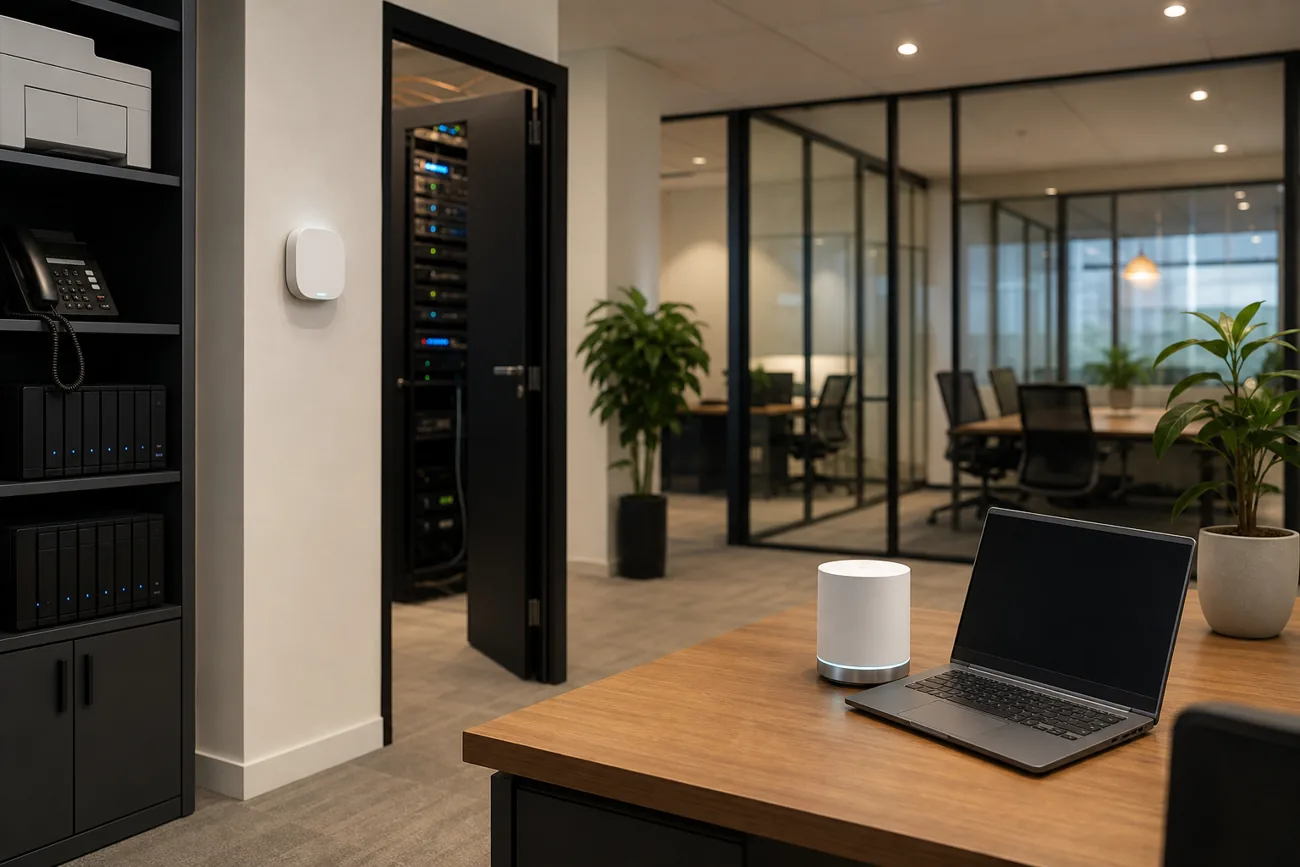
Wired Backbone and Device Corners
Mesh Wi-Fi can be a strong fit for large office spaces, but only when it is planned around the building instead of treated like a stronger single router. The best choice depends on floor layout, room materials, device density, meeting-room habits, backhaul options, and who will maintain the system after installation.
Wired device corners are easy to overlook. Printers, VoIP phones, shared scanners, NAS shelves, and small network closets can shape whether Ethernet ports or wired backhaul are essential.
Before comparing prices, draw a simple office map. Mark the main router location, conference rooms, weak corners, printer areas, private offices, shared desks, and any place where video calls or cloud work already feel unreliable. That map makes the feature list easier to judge.
A practical mesh rollout should feel quiet after the first week: devices connect to sensible nodes, calls stay stable while people move, guest access is controlled, and the team has a clear maintenance routine instead of a mystery network.
This page supports the main mesh Wi-Fi system guide. For product picks, compare the LeStallion mesh Wi-Fi system roundup.
- Confirm the mesh node improves the actual weak room, meeting area, or device corner.
- Test the system with the real office router, phones, laptops, and shared devices.
- Plan node names, admin access, guest access, firmware checks, and placement notes.
Practical mesh Wi-Fi system check 1
Mesh Wi-Fi can be a strong fit for large office spaces, but only when it is planned around the building instead of treated like a stronger single router. The best choice depends on floor layout, room materials, device density, meeting-room habits, backhaul options, and who will maintain the system after installation.
A good mesh Wi-Fi system matches coverage, roaming, backhaul, device density, security, and maintenance routines to the way the office actually works.
Before comparing prices, draw a simple office map. Mark the main router location, conference rooms, weak corners, printer areas, private offices, shared desks, and any place where video calls or cloud work already feel unreliable. That map makes the feature list easier to judge.
A practical mesh rollout should feel quiet after the first week: devices connect to sensible nodes, calls stay stable while people move, guest access is controlled, and the team has a clear maintenance routine instead of a mystery network.
Use a simple office test before trusting the setup: place the mesh node in its planned location, confirm signal on a laptop and phone, walk from desks to meeting rooms while watching roaming behavior, run a video-call check, test a cloud document upload, and confirm the dashboard reports a stable node. If any step feels fragile, adjust placement before adding more hardware.
Also review the setup after a few days rather than judging it only on first installation. Office mesh systems reveal their real value when staff stop mentioning dead spots, calls stay steady, and shared devices stay visible without help-desk attention.
For a large office, write down the router location, node locations, weak rooms, number of users, wall types, and the devices that complain most often. That simple note prevents buying a powerful mesh node for the wrong problem. A crowded channel, overloaded router, or poor placement can look like a range problem until the team tests it room by room.
Keep the maintenance plan plain. Save the admin login, label the mesh node, schedule firmware checks, and make sure one backup person knows where it is plugged in. The best mesh node choice is not only the fastest model; it is the one the office can keep stable after the first week.
Practical mesh Wi-Fi system check 2
Mesh Wi-Fi can be a strong fit for large office spaces, but only when it is planned around the building instead of treated like a stronger single router. The best choice depends on floor layout, room materials, device density, meeting-room habits, backhaul options, and who will maintain the system after installation.
A good mesh Wi-Fi system matches coverage, roaming, backhaul, device density, security, and maintenance routines to the way the office actually works.
Before comparing prices, draw a simple office map. Mark the main router location, conference rooms, weak corners, printer areas, private offices, shared desks, and any place where video calls or cloud work already feel unreliable. That map makes the feature list easier to judge.
A practical mesh rollout should feel quiet after the first week: devices connect to sensible nodes, calls stay stable while people move, guest access is controlled, and the team has a clear maintenance routine instead of a mystery network.
Use a simple office test before trusting the setup: place the mesh node in its planned location, confirm signal on a laptop and phone, walk from desks to meeting rooms while watching roaming behavior, run a video-call check, test a cloud document upload, and confirm the dashboard reports a stable node. If any step feels fragile, adjust placement before adding more hardware.
Also review the setup after a few days rather than judging it only on first installation. Office mesh systems reveal their real value when staff stop mentioning dead spots, calls stay steady, and shared devices stay visible without help-desk attention.
For a large office, write down the router location, node locations, weak rooms, number of users, wall types, and the devices that complain most often. That simple note prevents buying a powerful mesh node for the wrong problem. A crowded channel, overloaded router, or poor placement can look like a range problem until the team tests it room by room.
Keep the maintenance plan plain. Save the admin login, label the mesh node, schedule firmware checks, and make sure one backup person knows where it is plugged in. The best mesh node choice is not only the fastest model; it is the one the office can keep stable after the first week.
Practical mesh Wi-Fi system check 3
Mesh Wi-Fi can be a strong fit for large office spaces, but only when it is planned around the building instead of treated like a stronger single router. The best choice depends on floor layout, room materials, device density, meeting-room habits, backhaul options, and who will maintain the system after installation.
A good mesh Wi-Fi system matches coverage, roaming, backhaul, device density, security, and maintenance routines to the way the office actually works.
Before comparing prices, draw a simple office map. Mark the main router location, conference rooms, weak corners, printer areas, private offices, shared desks, and any place where video calls or cloud work already feel unreliable. That map makes the feature list easier to judge.
A practical mesh rollout should feel quiet after the first week: devices connect to sensible nodes, calls stay stable while people move, guest access is controlled, and the team has a clear maintenance routine instead of a mystery network.
Use a simple office test before trusting the setup: place the mesh node in its planned location, confirm signal on a laptop and phone, walk from desks to meeting rooms while watching roaming behavior, run a video-call check, test a cloud document upload, and confirm the dashboard reports a stable node. If any step feels fragile, adjust placement before adding more hardware.
Also review the setup after a few days rather than judging it only on first installation. Office mesh systems reveal their real value when staff stop mentioning dead spots, calls stay steady, and shared devices stay visible without help-desk attention.
For a large office, write down the router location, node locations, weak rooms, number of users, wall types, and the devices that complain most often. That simple note prevents buying a powerful mesh node for the wrong problem. A crowded channel, overloaded router, or poor placement can look like a range problem until the team tests it room by room.
Keep the maintenance plan plain. Save the admin login, label the mesh node, schedule firmware checks, and make sure one backup person knows where it is plugged in. The best mesh node choice is not only the fastest model; it is the one the office can keep stable after the first week.
Practical mesh Wi-Fi system check 4
Mesh Wi-Fi can be a strong fit for large office spaces, but only when it is planned around the building instead of treated like a stronger single router. The best choice depends on floor layout, room materials, device density, meeting-room habits, backhaul options, and who will maintain the system after installation.
A good mesh Wi-Fi system matches coverage, roaming, backhaul, device density, security, and maintenance routines to the way the office actually works.
Before comparing prices, draw a simple office map. Mark the main router location, conference rooms, weak corners, printer areas, private offices, shared desks, and any place where video calls or cloud work already feel unreliable. That map makes the feature list easier to judge.
A practical mesh rollout should feel quiet after the first week: devices connect to sensible nodes, calls stay stable while people move, guest access is controlled, and the team has a clear maintenance routine instead of a mystery network.
Use a simple office test before trusting the setup: place the mesh node in its planned location, confirm signal on a laptop and phone, walk from desks to meeting rooms while watching roaming behavior, run a video-call check, test a cloud document upload, and confirm the dashboard reports a stable node. If any step feels fragile, adjust placement before adding more hardware.
Also review the setup after a few days rather than judging it only on first installation. Office mesh systems reveal their real value when staff stop mentioning dead spots, calls stay steady, and shared devices stay visible without help-desk attention.
For a large office, write down the router location, node locations, weak rooms, number of users, wall types, and the devices that complain most often. That simple note prevents buying a powerful mesh node for the wrong problem. A crowded channel, overloaded router, or poor placement can look like a range problem until the team tests it room by room.
Keep the maintenance plan plain. Save the admin login, label the mesh node, schedule firmware checks, and make sure one backup person knows where it is plugged in. The best mesh node choice is not only the fastest model; it is the one the office can keep stable after the first week.
Final setup note
The best office mesh system is well placed, easy to manage, secure enough for guest access, and boring enough that daily work stops noticing the network.
Related reading
Return to the main guide, compare the LeStallion product picks, or visit the previous cloud page on Wi-Fi range extenders for offices.