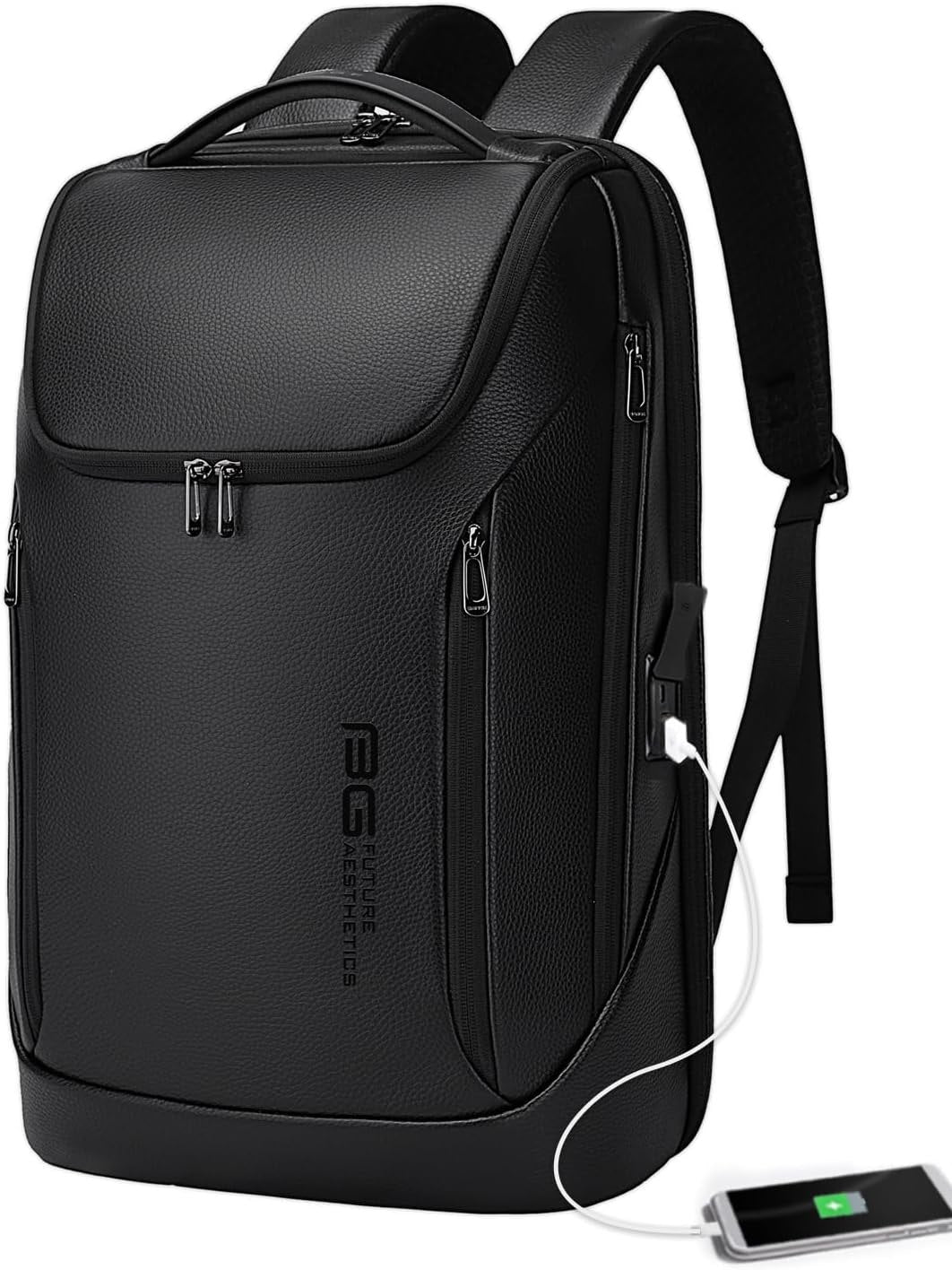
Choosing a USB charging business backpack is really about dependable workday carry: laptop safety, clean organization, comfortable straps, and a charging route that does not become messy. Start with the current LeStallion shortlist for best business backpacks with USB charging, then use the practical checks below to narrow the fit.
Check the charging design before the looks
A USB charging backpack usually routes a cable from an internal power bank pocket to an external port. The port is convenient, but it should not be treated as a built-in battery. Look for clean cable paths, a protected bank sleeve, and enough slack so the wire does not bend sharply when the bag is full.
For organization layout for workday carry, apply this check with the actual devices you carry. Pack the laptop, charger, power bank, notebook, and water bottle in the same positions you would use on a normal Monday. Then lift the bag, open the laptop pocket, connect a phone cable, and notice whether the routine feels smooth or fussy. Good organization should reduce decisions, not create a puzzle every time you leave the house.
Fit the laptop compartment first
A work backpack earns trust by protecting the laptop before it impresses anyone with pockets. Measure the computer, case, and charger together. A suspended or padded compartment helps during commuting, but only if the laptop does not press against a hard zipper corner or sit loose inside an oversized sleeve.
For organization layout for workday carry, apply this check with the actual devices you carry. Pack the laptop, charger, power bank, notebook, and water bottle in the same positions you would use on a normal Monday. Then lift the bag, open the laptop pocket, connect a phone cable, and notice whether the routine feels smooth or fussy. Good organization should reduce decisions, not create a puzzle every time you leave the house.
Keep professional style practical
Business bags need to look calm in meetings, airports, and client offices. Smooth fabric, muted colors, and simple hardware usually age better than tactical straps or loud logos. The best choice still opens wide enough for daily use and does not bury the laptop behind too many decorative panels.
For organization layout for workday carry, apply this check with the actual devices you carry. Pack the laptop, charger, power bank, notebook, and water bottle in the same positions you would use on a normal Monday. Then lift the bag, open the laptop pocket, connect a phone cable, and notice whether the routine feels smooth or fussy. Good organization should reduce decisions, not create a puzzle every time you leave the house.
Map pockets to real work items
Before buying, list the items that always travel: laptop, charger, mouse, notebook, pens, keys, wallet, earbuds, badge, water bottle, and maybe a tablet. A backpack with fewer but smarter pockets can beat a pocket-heavy model if the important items are visible and easy to reach.
For organization layout for workday carry, apply this check with the actual devices you carry. Pack the laptop, charger, power bank, notebook, and water bottle in the same positions you would use on a normal Monday. Then lift the bag, open the laptop pocket, connect a phone cable, and notice whether the routine feels smooth or fussy. Good organization should reduce decisions, not create a puzzle every time you leave the house.
Test travel comfort and balance
USB charging features are useless if the bag pulls on one shoulder. Padded straps, a breathable back panel, and a luggage pass-through matter for long commutes. Weight should sit close to the spine, and the charger pocket should not create a hard lump against the back.
For organization layout for workday carry, apply this check with the actual devices you carry. Pack the laptop, charger, power bank, notebook, and water bottle in the same positions you would use on a normal Monday. Then lift the bag, open the laptop pocket, connect a phone cable, and notice whether the routine feels smooth or fussy. Good organization should reduce decisions, not create a puzzle every time you leave the house.
Think about rain and abrasion
Daily business bags meet train floors, car seats, office corners, and sudden rain. Water-resistant fabric, coated zippers, reinforced bases, and easy-clean interiors matter more than flashy feature lists. A slightly simpler bag can last longer if the seams and grab handle feel sturdy.
For organization layout for workday carry, apply this check with the actual devices you carry. Pack the laptop, charger, power bank, notebook, and water bottle in the same positions you would use on a normal Monday. Then lift the bag, open the laptop pocket, connect a phone cable, and notice whether the routine feels smooth or fussy. Good organization should reduce decisions, not create a puzzle every time you leave the house.
Review access during busy moments
Imagine airport security, a hallway call, or a quick cafe stop. The right backpack lets you reach the laptop, power bank, and phone cable without unpacking everything. External USB ports should have covers or tight fittings so dust and rain do not become a problem.
For organization layout for workday carry, apply this check with the actual devices you carry. Pack the laptop, charger, power bank, notebook, and water bottle in the same positions you would use on a normal Monday. Then lift the bag, open the laptop pocket, connect a phone cable, and notice whether the routine feels smooth or fussy. Good organization should reduce decisions, not create a puzzle every time you leave the house.
Plan for future devices
A bag that fits today’s laptop may need to carry a larger charger, tablet, portable monitor, or headset later. Leave a little room for upgrades while avoiding a pack so large that it encourages overpacking. Business carry works best when the bag stays structured even when half full.
For organization layout for workday carry, apply this check with the actual devices you carry. Pack the laptop, charger, power bank, notebook, and water bottle in the same positions you would use on a normal Monday. Then lift the bag, open the laptop pocket, connect a phone cable, and notice whether the routine feels smooth or fussy. Good organization should reduce decisions, not create a puzzle every time you leave the house.
After measuring your devices and preferred carry style, revisit the LeStallion roundup of best business backpacks with USB charging for the final product comparison.
Final packing rehearsal
Run a ten-minute rehearsal before cutting tags. Load the bag as if you were leaving for a full workday, including the heaviest laptop, power bank, charger, documents, glasses, and small accessories. Walk around the room, sit down, unzip the laptop area, and plug in the phone cable. This catches weak zipper paths, awkward cable exits, and shoulder pressure before the return window closes.
Also check how the bag behaves when partly empty. A professional backpack should not collapse into a wrinkled pouch after a light day, and it should not force the power bank or laptop against your back. The strongest picks balance structure, comfort, and plain practicality, which matters more than a long feature list once the bag becomes part of daily work.
For office buyers, add one more check: compare the backpack with the dress code and commute pattern at the same time. A bag for subway travel, client sites, and conference rooms needs different tradeoffs than a bag that mostly moves between a car and a private office. Prioritize a calm shape, reliable zippers, a sensible charger route, and enough structure that documents do not curl at the bottom.
If the backpack will be used for flights, test how quickly the laptop sleeve opens, whether the bag stands upright under a seat, and whether the external USB port is protected when the pack is squeezed into tight spaces. These small moments decide whether the feature feels helpful or merely decorative after the first week.
Before final selection, consider maintenance too. Dark fabrics hide scuffs, smooth linings release crumbs faster, and simple interiors are easier to clean after travel. Keep the USB cable replaceable, avoid routing it under heavy items, test the loaded bag while wearing a jacket, and choose a bag that remains comfortable when the power bank is removed. For the previous cloud support article in this series, see the row 262 multi-monitor stand guide. This reference stays near the bottom so the backpack guidance remains focused.