Why a shop stool is different from a garage stool
A shop stool gets used around benches, small machines, tool cabinets, and projects that move in short bursts. The best rolling shop stool should not feel like a chair dragged into a workshop. It should feel like a small mobile workstation that keeps your posture calmer and your tools closer.
A shop stool gets used around benches, small machines, tool cabinets, and projects that move in short bursts. The best rolling shop stool should not feel like a chair dragged into a workshop. It should feel like a small mobile workstation that keeps your posture calmer and your tools closer. The difference is especially noticeable during repetitive work, where getting up for every small item breaks concentration and makes simple jobs feel longer than they need to be.
The caster test I care about
Casters matter because shop floors collect sawdust, metal shavings, cord loops, and small offcuts. A stool that rolls smoothly on a clean showroom floor may feel nervous in a working shop. I look for wheels that track cleanly, do not chatter over seams, and feel predictable when you shift sideways.
Casters matter because shop floors collect sawdust, metal shavings, cord loops, and small offcuts. A stool that rolls smoothly on a clean showroom floor may feel nervous in a working shop. I look for wheels that track cleanly, do not chatter over seams, and feel predictable when you shift sideways. The difference is especially noticeable during repetitive work, where getting up for every small item breaks concentration and makes simple jobs feel longer than they need to be.
Seat comfort without getting bulky
A padded seat helps when you are sanding, assembling, sorting hardware, or working low on a cabinet. But too much bulk can make a stool awkward under benches. The sweet spot is enough cushion to reduce pressure, with a seat shape that still lets you turn quickly.
A padded seat helps when you are sanding, assembling, sorting hardware, or working low on a cabinet. But too much bulk can make a stool awkward under benches. The sweet spot is enough cushion to reduce pressure, with a seat shape that still lets you turn quickly. The difference is especially noticeable during repetitive work, where getting up for every small item breaks concentration and makes simple jobs feel longer than they need to be.
Storage that supports the work
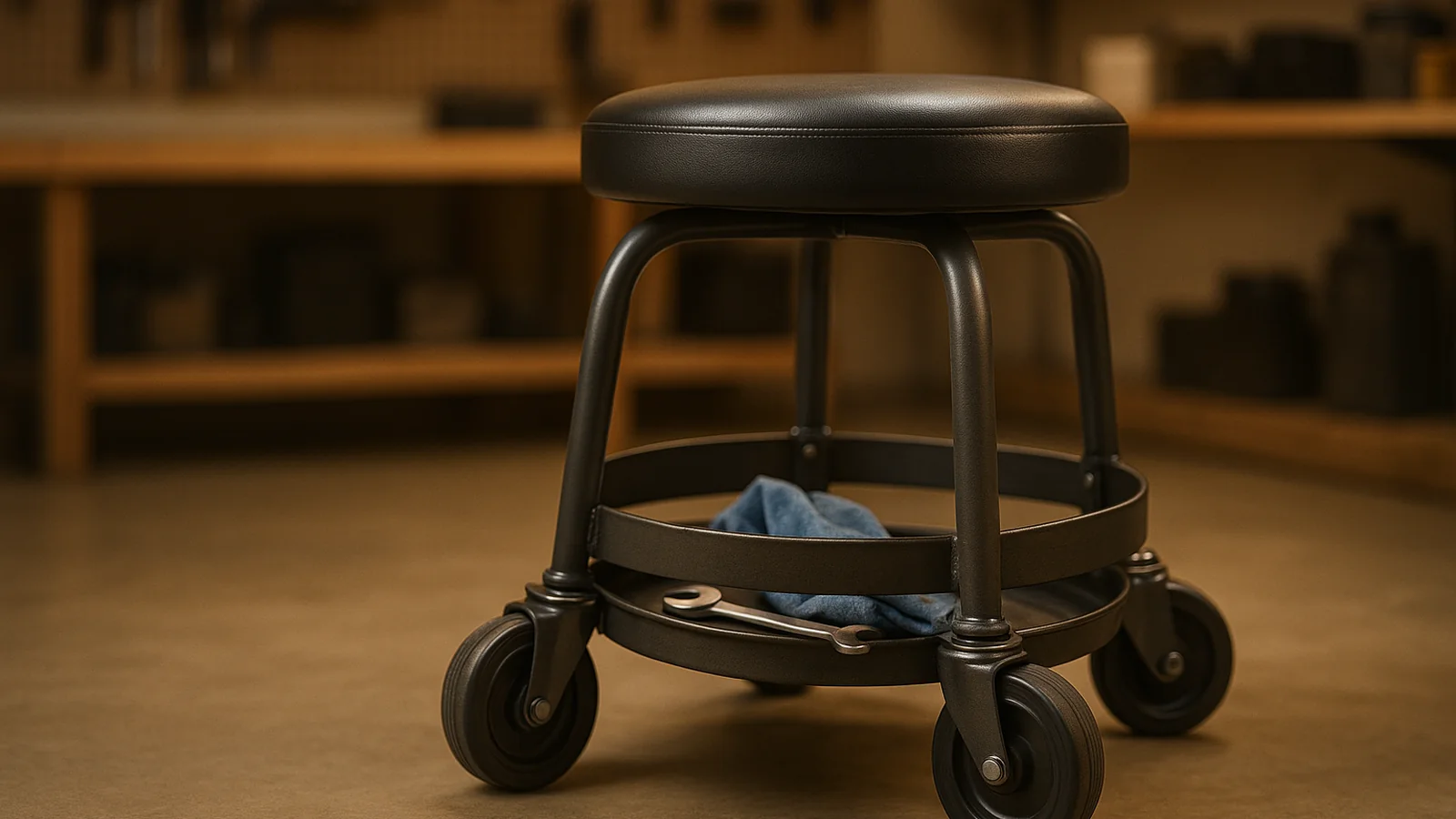
A lower tray is useful if it holds the handful of things you keep reaching for: tape measure, pencil, wrench, bit case, rag, or safety glasses. It should not be so shallow that parts bounce out when the stool rolls. In a small shop, that tray can save several trips back to the bench.
A lower tray is useful if it holds the handful of things you keep reaching for: tape measure, pencil, wrench, bit case, rag, or safety glasses. It should not be so shallow that parts bounce out when the stool rolls. In a small shop, that tray can save several trips back to the bench. The difference is especially noticeable during repetitive work, where getting up for every small item breaks concentration and makes simple jobs feel longer than they need to be.
Frame stability and shop safety
The frame should feel planted when you lean toward a clamp or drawer slide. A wider stance, sensible height range, and clear weight rating matter more than decorative styling. I would rather have a plain stool that feels stable than a flashy stool that wobbles.
The frame should feel planted when you lean toward a clamp or drawer slide. A wider stance, sensible height range, and clear weight rating matter more than decorative styling. I would rather have a plain stool that feels stable than a flashy stool that wobbles. The difference is especially noticeable during repetitive work, where getting up for every small item breaks concentration and makes simple jobs feel longer than they need to be.
How I would choose one
For mixed shop use, I would prioritize a stable frame, smooth casters, comfortable padding, and a practical tool tray. Readers comparing product shortlists can use those basics before narrowing down by height, weight rating, and floor type.
For mixed shop use, I would prioritize a stable frame, smooth casters, comfortable padding, and a practical tool tray. Readers comparing product shortlists can use those basics before narrowing down by height, weight rating, and floor type. The difference is especially noticeable during repetitive work, where getting up for every small item breaks concentration and makes simple jobs feel longer than they need to be.
Quick buying checklist
- Smooth casters that suit your shop floor.
- Stable frame and sensible seat height.
- Comfortable padding without bulky movement.
- Tool tray with a raised edge.
- Easy-clean materials for dust and grime.
For a product-focused shortlist, compare it with LS’s guide to the best rolling shop stool options.
FAQ
What makes a rolling stool good for shop use?
Stable frame design, smooth casters, a comfortable seat, and useful lower storage matter most for daily shop use.
Should a shop stool have a tray?
A tray is useful when it has a raised lip and enough room for the small tools you actually use during a task.
Are large casters better?
Larger or better-built casters usually handle seams, dust, and small debris more predictably than tiny wheels.
What seat height works best?
Match the height to your bench and common tasks. Adjustable stools are best when you switch between low and bench-height work.
What should I avoid?
Avoid narrow bases, vague weight ratings, thin padding, and wheels that feel sticky or unstable on your floor.
Rolling garage stool workshop notes
A Broader Rolling Stool Fit Check
If your seat will move between tasks rather than stay at one shop bench, the next general rolling-stool guide provides a broader fit-and-use perspective.
http://interlinkar.s3-website-us-east-1.amazonaws.com/lestallion/stool-studio/index.html