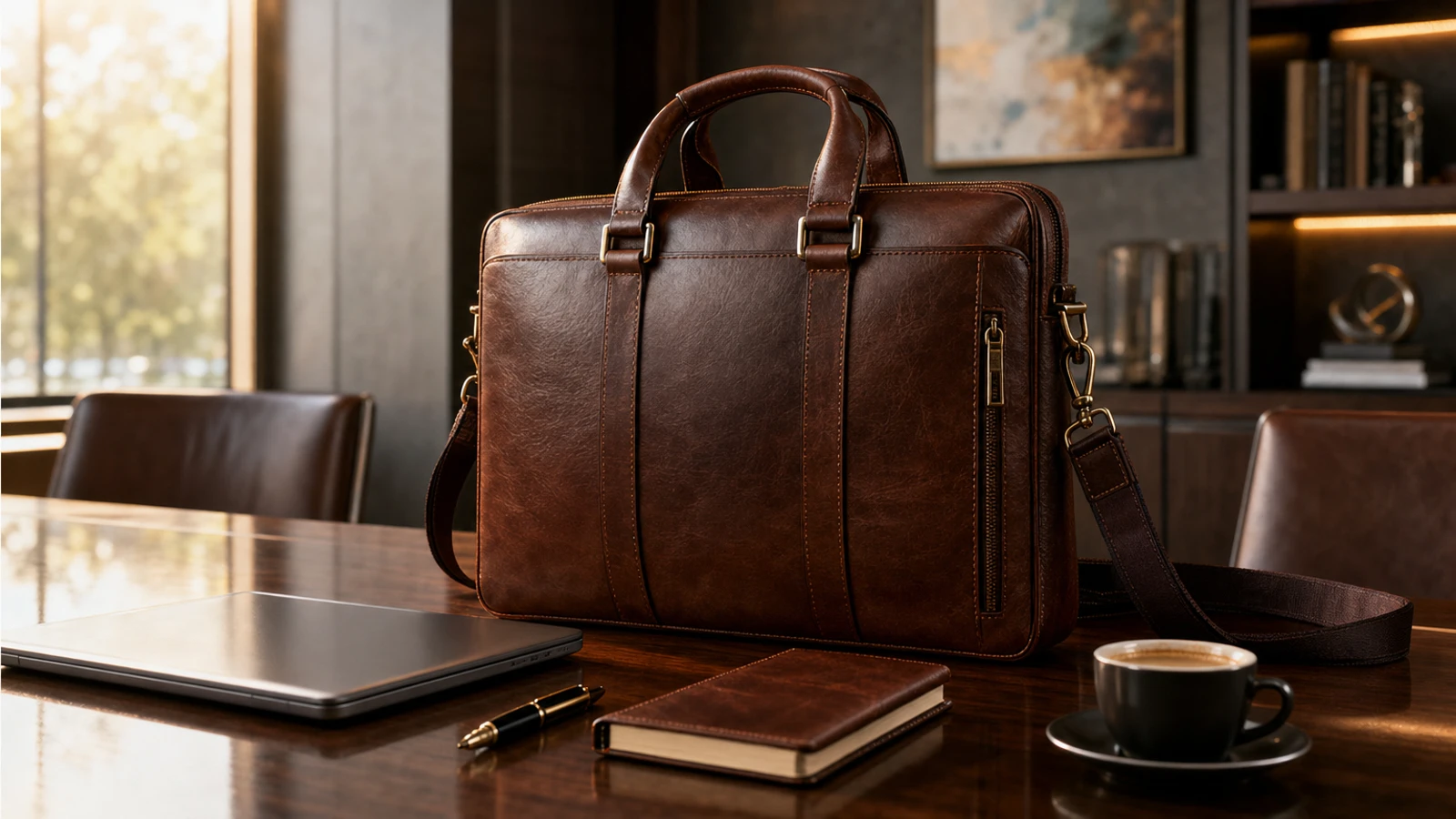
This support page focuses on interior organization for meetings, travel, and daily carry for executive leather briefcases. The main shortlist covers product options; this page keeps the buying context clear and practical.
Interior Organization for Meetings, Travel, and Daily Carry
Organization should reduce friction. The goal is not the maximum number of pockets. The goal is knowing where the important things live when you are walking into a meeting. A phone slot, pen loop, document divider, laptop sleeve, and small zip pocket can be enough if each one is easy to reach.
Meetings reward quiet access. Velcro, noisy magnets, stiff clasps, and crowded pockets can feel awkward in a quiet conference room. Executive carry works best when you can remove a folder, pen, or charger without making the bag the center of attention. Smooth, predictable access feels more professional than complicated organization.
Travel changes the priorities. If the briefcase will fly often, look for a luggage pass-through, secure closure, strong shoulder strap hardware, and a shape that fits under a seat without crushing papers. If it is mostly for office-to-car use, a cleaner classic layout may matter more than travel features.
Do not ignore lining. A handsome exterior can be undermined by loose fabric, rough seams, or a lining that catches paper corners. Interior material should feel durable enough for chargers and notebooks, not so delicate that normal daily carry becomes risky.
Build a personal loading rule. Choose a briefcase around your real daily kit, then keep a simple loading routine: laptop in sleeve, papers flat, charger in one pocket, pens in loops, personal items in a zip pocket. Good organization protects both the bag and your arrival mood.
Practical decision notes
Executive scenario 1: Organization should reduce friction. In a real buying conversation, this point deserves a second pass because the goal is not the maximum number of pockets. the goal is knowing where the important things live when you are walking into a meeting. a phone slot, pen loop, document divider, laptop sleeve, and small zip pocket can be enough if each one is easy to reach. Ask whether that detail still feels right after the briefcase is packed with a laptop, papers, charger, pen, phone, keys, and one personal item. If the answer depends on perfect conditions, keep comparing before treating the case as a long-term professional carry.
Inspection cue 1. For interior organization for meetings, travel, and daily carry, look beyond the front product image and study the side profile, open interior, bottom edge, handle area, and closure behavior. A polished executive briefcase should make this specific detail easy to understand without guessing, because the bag will be opened, lifted, placed down, and repacked repeatedly during client-facing work.
Decision filter 1. Keep this question tied to the owner's actual routine: commute length, meeting formality, document sensitivity, device size, wardrobe color, travel frequency, and willingness to care for leather. The right answer is the one that still feels calm and useful after several ordinary workweeks, not only during the excitement of unboxing.
Executive scenario 2: Meetings reward quiet access. In a real buying conversation, this point deserves a second pass because velcro, noisy magnets, stiff clasps, and crowded pockets can feel awkward in a quiet conference room. executive carry works best when you can remove a folder, pen, or charger without making the bag the center of attention. smooth, predictable access feels more professional than complicated organization. Ask whether that detail still feels right after the briefcase is packed with a laptop, papers, charger, pen, phone, keys, and one personal item. If the answer depends on perfect conditions, keep comparing before treating the case as a long-term professional carry.
Inspection cue 2. For interior organization for meetings, travel, and daily carry, look beyond the front product image and study the side profile, open interior, bottom edge, handle area, and closure behavior. A polished executive briefcase should make this specific detail easy to understand without guessing, because the bag will be opened, lifted, placed down, and repacked repeatedly during client-facing work.
Decision filter 2. Keep this question tied to the owner's actual routine: commute length, meeting formality, document sensitivity, device size, wardrobe color, travel frequency, and willingness to care for leather. The right answer is the one that still feels calm and useful after several ordinary workweeks, not only during the excitement of unboxing.
Executive scenario 3: Travel changes the priorities. In a real buying conversation, this point deserves a second pass because if the briefcase will fly often, look for a luggage pass-through, secure closure, strong shoulder strap hardware, and a shape that fits under a seat without crushing papers. if it is mostly for office-to-car use, a cleaner classic layout may matter more than travel features. Ask whether that detail still feels right after the briefcase is packed with a laptop, papers, charger, pen, phone, keys, and one personal item. If the answer depends on perfect conditions, keep comparing before treating the case as a long-term professional carry.
Inspection cue 3. For interior organization for meetings, travel, and daily carry, look beyond the front product image and study the side profile, open interior, bottom edge, handle area, and closure behavior. A polished executive briefcase should make this specific detail easy to understand without guessing, because the bag will be opened, lifted, placed down, and repacked repeatedly during client-facing work.
Decision filter 3. Keep this question tied to the owner's actual routine: commute length, meeting formality, document sensitivity, device size, wardrobe color, travel frequency, and willingness to care for leather. The right answer is the one that still feels calm and useful after several ordinary workweeks, not only during the excitement of unboxing.
Executive scenario 4: Do not ignore lining. In a real buying conversation, this point deserves a second pass because a handsome exterior can be undermined by loose fabric, rough seams, or a lining that catches paper corners. interior material should feel durable enough for chargers and notebooks, not so delicate that normal daily carry becomes risky. Ask whether that detail still feels right after the briefcase is packed with a laptop, papers, charger, pen, phone, keys, and one personal item. If the answer depends on perfect conditions, keep comparing before treating the case as a long-term professional carry.
Inspection cue 4. For interior organization for meetings, travel, and daily carry, look beyond the front product image and study the side profile, open interior, bottom edge, handle area, and closure behavior. A polished executive briefcase should make this specific detail easy to understand without guessing, because the bag will be opened, lifted, placed down, and repacked repeatedly during client-facing work.
Decision filter 4. Keep this question tied to the owner's actual routine: commute length, meeting formality, document sensitivity, device size, wardrobe color, travel frequency, and willingness to care for leather. The right answer is the one that still feels calm and useful after several ordinary workweeks, not only during the excitement of unboxing.
Executive scenario 5: Build a personal loading rule. In a real buying conversation, this point deserves a second pass because choose a briefcase around your real daily kit, then keep a simple loading routine: laptop in sleeve, papers flat, charger in one pocket, pens in loops, personal items in a zip pocket. good organization protects both the bag and your arrival mood. Ask whether that detail still feels right after the briefcase is packed with a laptop, papers, charger, pen, phone, keys, and one personal item. If the answer depends on perfect conditions, keep comparing before treating the case as a long-term professional carry.
Inspection cue 5. For interior organization for meetings, travel, and daily carry, look beyond the front product image and study the side profile, open interior, bottom edge, handle area, and closure behavior. A polished executive briefcase should make this specific detail easy to understand without guessing, because the bag will be opened, lifted, placed down, and repacked repeatedly during client-facing work.
Decision filter 5. Keep this question tied to the owner's actual routine: commute length, meeting formality, document sensitivity, device size, wardrobe color, travel frequency, and willingness to care for leather. The right answer is the one that still feels calm and useful after several ordinary workweeks, not only during the excitement of unboxing.
Use the hub and related support pages to compare leather briefcase details before choosing a professional work bag.