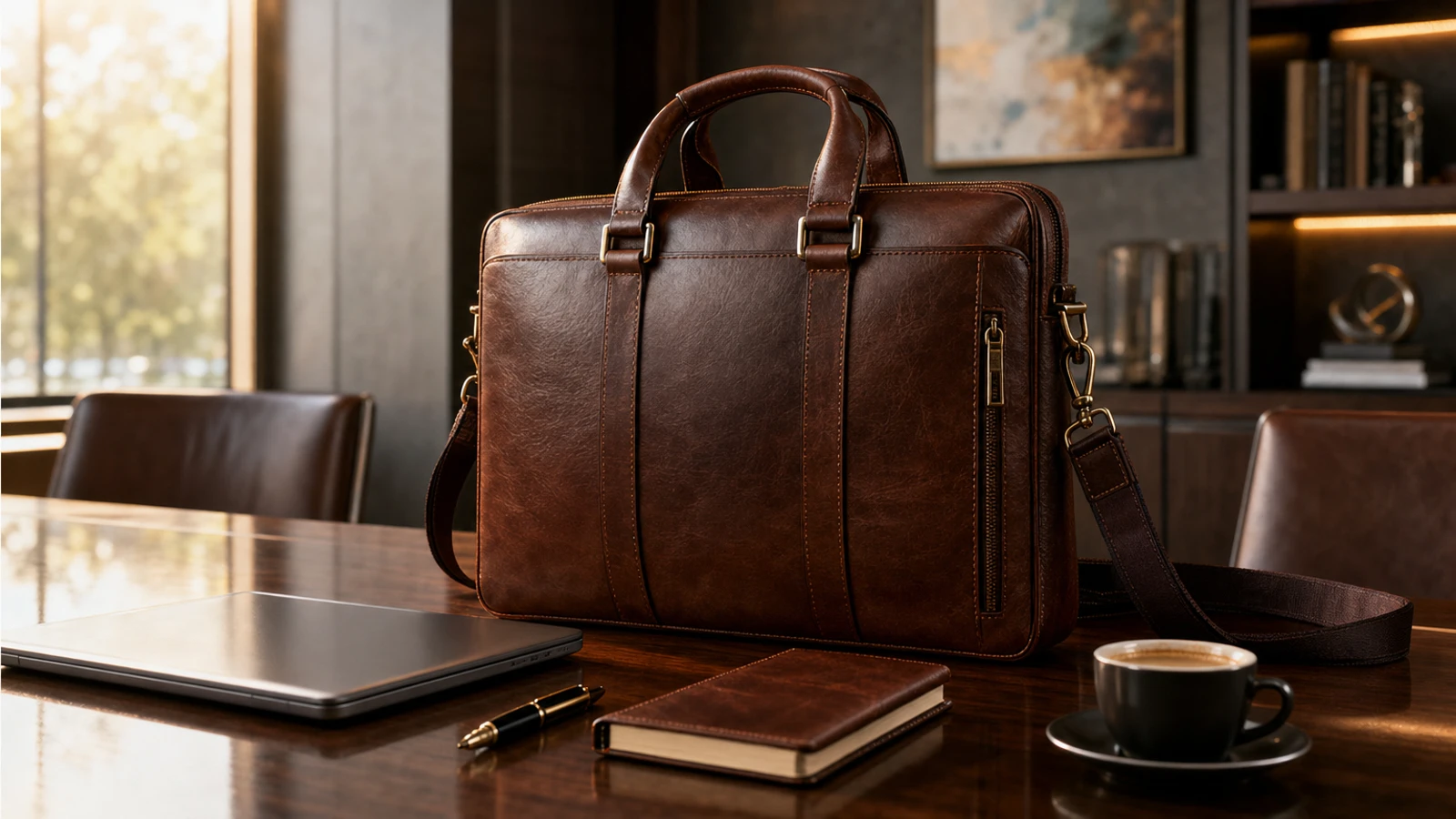
This support page focuses on laptop, legal pad, and document fit without overstuffing for executive leather briefcases. The main shortlist covers product options; this page keeps the buying context clear and practical.
Laptop, Legal Pad, and Document Fit Without Overstuffing
Measure the objects that actually travel. Executive briefcases often fail because buyers judge capacity by laptop size alone. Add the laptop sleeve, charger, legal pad, folder, glasses case, badge, keys, phone, pen case, and a small personal item. A bag that barely closes on day one will strain seams and lose its clean shape quickly.
Separate device fit from document fit. A padded laptop slot protects electronics, but documents need flat room that does not bend corners. If you carry contracts, printed decks, closing folders, or client notes, check interior width and height against real paper size. The best leather briefcase for a professional routine keeps documents crisp without forcing the laptop to press into them.
Watch depth carefully. Extra depth sounds useful, yet a bulky briefcase can look more like luggage than an executive work bag. The sweet spot is enough gusset for a normal workday, not so much that the case slumps or bangs into chairs. Structured sides, a flat bottom, and a sensible opening make capacity feel organized rather than swollen.
Consider security at the opening. A zipper, flap, lock, or tuck closure changes how confidently you can move through airports, restaurants, court buildings, and conference centers. Quick access is helpful, but a wide-open tote-style case may expose private papers. Pick the closure style that matches your privacy needs and pace.
Think about end-of-day repacking. A good briefcase should be easy to reset after meetings. If every item has to be stacked in one exact order, the bag will become frustrating. Choose a layout that lets you remove a notebook or laptop without unloading the entire interior in front of a client.
Practical decision notes
Executive scenario 1: Measure the objects that actually travel. In a real buying conversation, this point deserves a second pass because executive briefcases often fail because buyers judge capacity by laptop size alone. add the laptop sleeve, charger, legal pad, folder, glasses case, badge, keys, phone, pen case, and a small personal item. a bag that barely closes on day one will strain seams and lose its clean shape quickly. Ask whether that detail still feels right after the briefcase is packed with a laptop, papers, charger, pen, phone, keys, and one personal item. If the answer depends on perfect conditions, keep comparing before treating the case as a long-term professional carry.
Inspection cue 1. For laptop, legal pad, and document fit without overstuffing, look beyond the front product image and study the side profile, open interior, bottom edge, handle area, and closure behavior. A polished executive briefcase should make this specific detail easy to understand without guessing, because the bag will be opened, lifted, placed down, and repacked repeatedly during client-facing work.
Decision filter 1. Keep this question tied to the owner's actual routine: commute length, meeting formality, document sensitivity, device size, wardrobe color, travel frequency, and willingness to care for leather. The right answer is the one that still feels calm and useful after several ordinary workweeks, not only during the excitement of unboxing.
Executive scenario 2: Separate device fit from document fit. In a real buying conversation, this point deserves a second pass because a padded laptop slot protects electronics, but documents need flat room that does not bend corners. if you carry contracts, printed decks, closing folders, or client notes, check interior width and height against real paper size. the best leather briefcase for a professional routine keeps documents crisp without forcing the laptop to press into them. Ask whether that detail still feels right after the briefcase is packed with a laptop, papers, charger, pen, phone, keys, and one personal item. If the answer depends on perfect conditions, keep comparing before treating the case as a long-term professional carry.
Inspection cue 2. For laptop, legal pad, and document fit without overstuffing, look beyond the front product image and study the side profile, open interior, bottom edge, handle area, and closure behavior. A polished executive briefcase should make this specific detail easy to understand without guessing, because the bag will be opened, lifted, placed down, and repacked repeatedly during client-facing work.
Decision filter 2. Keep this question tied to the owner's actual routine: commute length, meeting formality, document sensitivity, device size, wardrobe color, travel frequency, and willingness to care for leather. The right answer is the one that still feels calm and useful after several ordinary workweeks, not only during the excitement of unboxing.
Executive scenario 3: Watch depth carefully. In a real buying conversation, this point deserves a second pass because extra depth sounds useful, yet a bulky briefcase can look more like luggage than an executive work bag. the sweet spot is enough gusset for a normal workday, not so much that the case slumps or bangs into chairs. structured sides, a flat bottom, and a sensible opening make capacity feel organized rather than swollen. Ask whether that detail still feels right after the briefcase is packed with a laptop, papers, charger, pen, phone, keys, and one personal item. If the answer depends on perfect conditions, keep comparing before treating the case as a long-term professional carry.
Inspection cue 3. For laptop, legal pad, and document fit without overstuffing, look beyond the front product image and study the side profile, open interior, bottom edge, handle area, and closure behavior. A polished executive briefcase should make this specific detail easy to understand without guessing, because the bag will be opened, lifted, placed down, and repacked repeatedly during client-facing work.
Decision filter 3. Keep this question tied to the owner's actual routine: commute length, meeting formality, document sensitivity, device size, wardrobe color, travel frequency, and willingness to care for leather. The right answer is the one that still feels calm and useful after several ordinary workweeks, not only during the excitement of unboxing.
Executive scenario 4: Consider security at the opening. In a real buying conversation, this point deserves a second pass because a zipper, flap, lock, or tuck closure changes how confidently you can move through airports, restaurants, court buildings, and conference centers. quick access is helpful, but a wide-open tote-style case may expose private papers. pick the closure style that matches your privacy needs and pace. Ask whether that detail still feels right after the briefcase is packed with a laptop, papers, charger, pen, phone, keys, and one personal item. If the answer depends on perfect conditions, keep comparing before treating the case as a long-term professional carry.
Inspection cue 4. For laptop, legal pad, and document fit without overstuffing, look beyond the front product image and study the side profile, open interior, bottom edge, handle area, and closure behavior. A polished executive briefcase should make this specific detail easy to understand without guessing, because the bag will be opened, lifted, placed down, and repacked repeatedly during client-facing work.
Decision filter 4. Keep this question tied to the owner's actual routine: commute length, meeting formality, document sensitivity, device size, wardrobe color, travel frequency, and willingness to care for leather. The right answer is the one that still feels calm and useful after several ordinary workweeks, not only during the excitement of unboxing.
Executive scenario 5: Think about end-of-day repacking. In a real buying conversation, this point deserves a second pass because a good briefcase should be easy to reset after meetings. if every item has to be stacked in one exact order, the bag will become frustrating. choose a layout that lets you remove a notebook or laptop without unloading the entire interior in front of a client. Ask whether that detail still feels right after the briefcase is packed with a laptop, papers, charger, pen, phone, keys, and one personal item. If the answer depends on perfect conditions, keep comparing before treating the case as a long-term professional carry.
Inspection cue 5. For laptop, legal pad, and document fit without overstuffing, look beyond the front product image and study the side profile, open interior, bottom edge, handle area, and closure behavior. A polished executive briefcase should make this specific detail easy to understand without guessing, because the bag will be opened, lifted, placed down, and repacked repeatedly during client-facing work.
Decision filter 5. Keep this question tied to the owner's actual routine: commute length, meeting formality, document sensitivity, device size, wardrobe color, travel frequency, and willingness to care for leather. The right answer is the one that still feels calm and useful after several ordinary workweeks, not only during the excitement of unboxing.
Use the hub and related support pages to compare leather briefcase details before choosing a professional work bag.