This support page focuses on hardware, handles, zippers, and closure details that age well for executive leather briefcases. The main shortlist covers product options; this page keeps the buying context clear and practical.
Hardware, Handles, Zippers, and Closure Details That Age Well
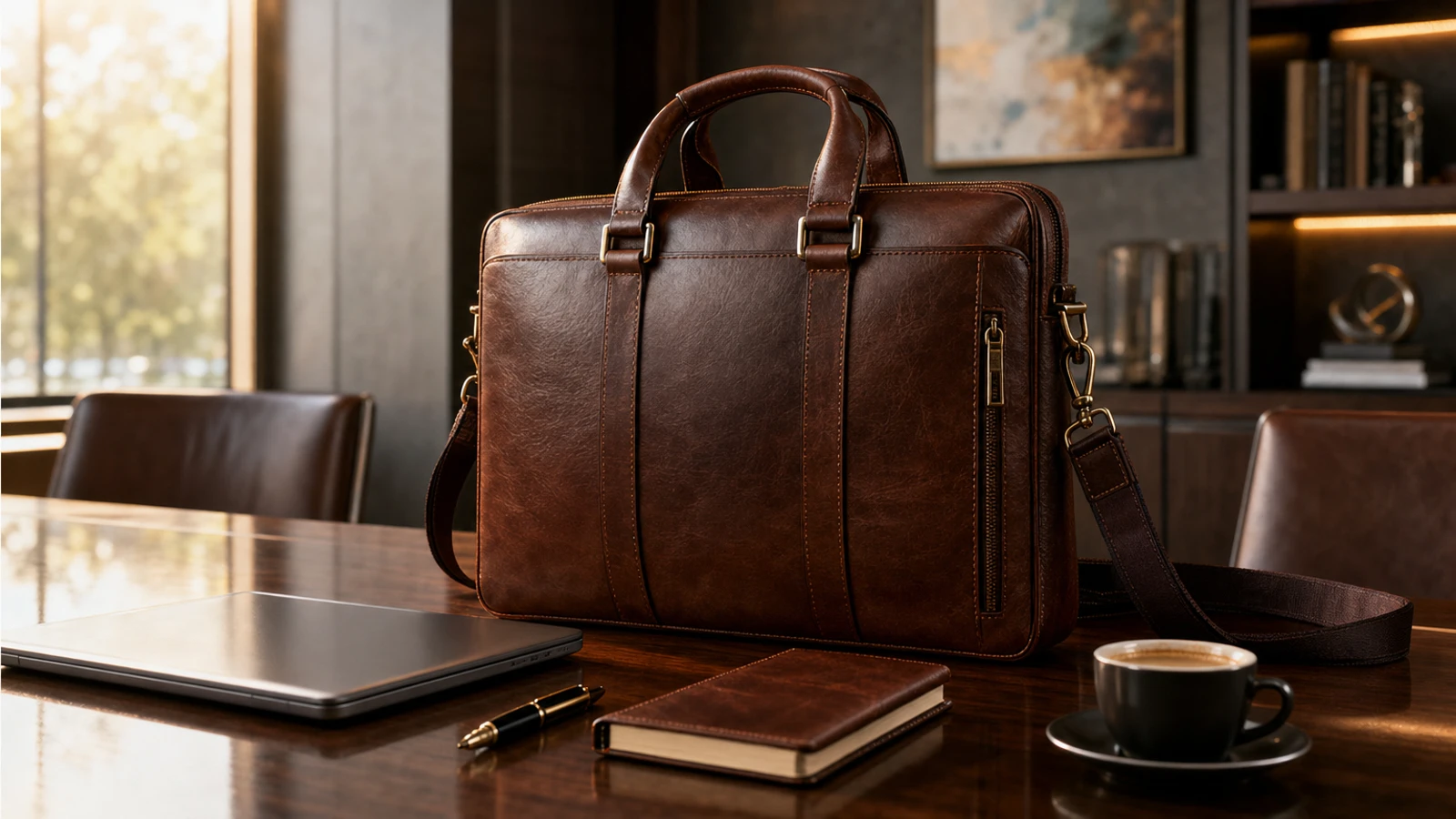
Hardware sets the tone. Buckles, clasps, zipper pulls, D-rings, feet, and lock plates are small, but they decide whether a leather briefcase feels premium or costume-like. Heavy, cleanly finished hardware with smooth edges usually ages better than bright, thin pieces that rattle. The finish should suit the leather color and the wearer’s normal belt, watch, or shoe tones.
Handles deserve close inspection. Handles carry the bag’s weight every day. Look for reinforced anchors, neat stitching, comfortable shape, and enough drop to clear the knuckles. A beautiful body with weak handles is a poor executive choice because handle repair can be costly and visually obvious.
Zippers should not fight the structure. If a briefcase uses zippers, they should run smoothly around corners without pulling the leather out of shape. Large teeth may feel rugged but can look casual; very fine teeth can feel sleek but may struggle under load. A professional bag needs dependable movement more than decorative shine.
Feet and bottom protection matter. Metal feet, a reinforced base, or a darker bottom panel can help a case survive taxis, office floors, and meeting rooms. Without bottom protection, leather can scuff quickly when placed beside a chair. This is especially important for lighter tan or cognac briefcases.
Check replaceability and warranty language. Hardware can be the first thing to fail after years of use. Favor makers that describe materials clearly and offer repair guidance. If the listing hides hardware details, treat that as a reason to slow down and compare alternatives before buying.
Practical decision notes
Executive scenario 1: Hardware sets the tone. In a real buying conversation, this point deserves a second pass because buckles, clasps, zipper pulls, d-rings, feet, and lock plates are small, but they decide whether a leather briefcase feels premium or costume-like. heavy, cleanly finished hardware with smooth edges usually ages better than bright, thin pieces that rattle. the finish should suit the leather color and the wearer’s normal belt, watch, or shoe tones. Ask whether that detail still feels right after the briefcase is packed with a laptop, papers, charger, pen, phone, keys, and one personal item. If the answer depends on perfect conditions, keep comparing before treating the case as a long-term professional carry.
Inspection cue 1. For hardware, handles, zippers, and closure details that age well, look beyond the front product image and study the side profile, open interior, bottom edge, handle area, and closure behavior. A polished executive briefcase should make this specific detail easy to understand without guessing, because the bag will be opened, lifted, placed down, and repacked repeatedly during client-facing work.
Decision filter 1. Keep this question tied to the owner's actual routine: commute length, meeting formality, document sensitivity, device size, wardrobe color, travel frequency, and willingness to care for leather. The right answer is the one that still feels calm and useful after several ordinary workweeks, not only during the excitement of unboxing.
Executive scenario 2: Handles deserve close inspection. In a real buying conversation, this point deserves a second pass because handles carry the bag’s weight every day. look for reinforced anchors, neat stitching, comfortable shape, and enough drop to clear the knuckles. a beautiful body with weak handles is a poor executive choice because handle repair can be costly and visually obvious. Ask whether that detail still feels right after the briefcase is packed with a laptop, papers, charger, pen, phone, keys, and one personal item. If the answer depends on perfect conditions, keep comparing before treating the case as a long-term professional carry.
Inspection cue 2. For hardware, handles, zippers, and closure details that age well, look beyond the front product image and study the side profile, open interior, bottom edge, handle area, and closure behavior. A polished executive briefcase should make this specific detail easy to understand without guessing, because the bag will be opened, lifted, placed down, and repacked repeatedly during client-facing work.
Decision filter 2. Keep this question tied to the owner's actual routine: commute length, meeting formality, document sensitivity, device size, wardrobe color, travel frequency, and willingness to care for leather. The right answer is the one that still feels calm and useful after several ordinary workweeks, not only during the excitement of unboxing.
Executive scenario 3: Zippers should not fight the structure. In a real buying conversation, this point deserves a second pass because if a briefcase uses zippers, they should run smoothly around corners without pulling the leather out of shape. large teeth may feel rugged but can look casual; very fine teeth can feel sleek but may struggle under load. a professional bag needs dependable movement more than decorative shine. Ask whether that detail still feels right after the briefcase is packed with a laptop, papers, charger, pen, phone, keys, and one personal item. If the answer depends on perfect conditions, keep comparing before treating the case as a long-term professional carry.
Inspection cue 3. For hardware, handles, zippers, and closure details that age well, look beyond the front product image and study the side profile, open interior, bottom edge, handle area, and closure behavior. A polished executive briefcase should make this specific detail easy to understand without guessing, because the bag will be opened, lifted, placed down, and repacked repeatedly during client-facing work.
Decision filter 3. Keep this question tied to the owner's actual routine: commute length, meeting formality, document sensitivity, device size, wardrobe color, travel frequency, and willingness to care for leather. The right answer is the one that still feels calm and useful after several ordinary workweeks, not only during the excitement of unboxing.
Executive scenario 4: Feet and bottom protection matter. In a real buying conversation, this point deserves a second pass because metal feet, a reinforced base, or a darker bottom panel can help a case survive taxis, office floors, and meeting rooms. without bottom protection, leather can scuff quickly when placed beside a chair. this is especially important for lighter tan or cognac briefcases. Ask whether that detail still feels right after the briefcase is packed with a laptop, papers, charger, pen, phone, keys, and one personal item. If the answer depends on perfect conditions, keep comparing before treating the case as a long-term professional carry.
Inspection cue 4. For hardware, handles, zippers, and closure details that age well, look beyond the front product image and study the side profile, open interior, bottom edge, handle area, and closure behavior. A polished executive briefcase should make this specific detail easy to understand without guessing, because the bag will be opened, lifted, placed down, and repacked repeatedly during client-facing work.
Decision filter 4. Keep this question tied to the owner's actual routine: commute length, meeting formality, document sensitivity, device size, wardrobe color, travel frequency, and willingness to care for leather. The right answer is the one that still feels calm and useful after several ordinary workweeks, not only during the excitement of unboxing.
Executive scenario 5: Check replaceability and warranty language. In a real buying conversation, this point deserves a second pass because hardware can be the first thing to fail after years of use. favor makers that describe materials clearly and offer repair guidance. if the listing hides hardware details, treat that as a reason to slow down and compare alternatives before buying. Ask whether that detail still feels right after the briefcase is packed with a laptop, papers, charger, pen, phone, keys, and one personal item. If the answer depends on perfect conditions, keep comparing before treating the case as a long-term professional carry.
Inspection cue 5. For hardware, handles, zippers, and closure details that age well, look beyond the front product image and study the side profile, open interior, bottom edge, handle area, and closure behavior. A polished executive briefcase should make this specific detail easy to understand without guessing, because the bag will be opened, lifted, placed down, and repacked repeatedly during client-facing work.
Decision filter 5. Keep this question tied to the owner's actual routine: commute length, meeting formality, document sensitivity, device size, wardrobe color, travel frequency, and willingness to care for leather. The right answer is the one that still feels calm and useful after several ordinary workweeks, not only during the excitement of unboxing.
Use the hub and related support pages to compare leather briefcase details before choosing a professional work bag.