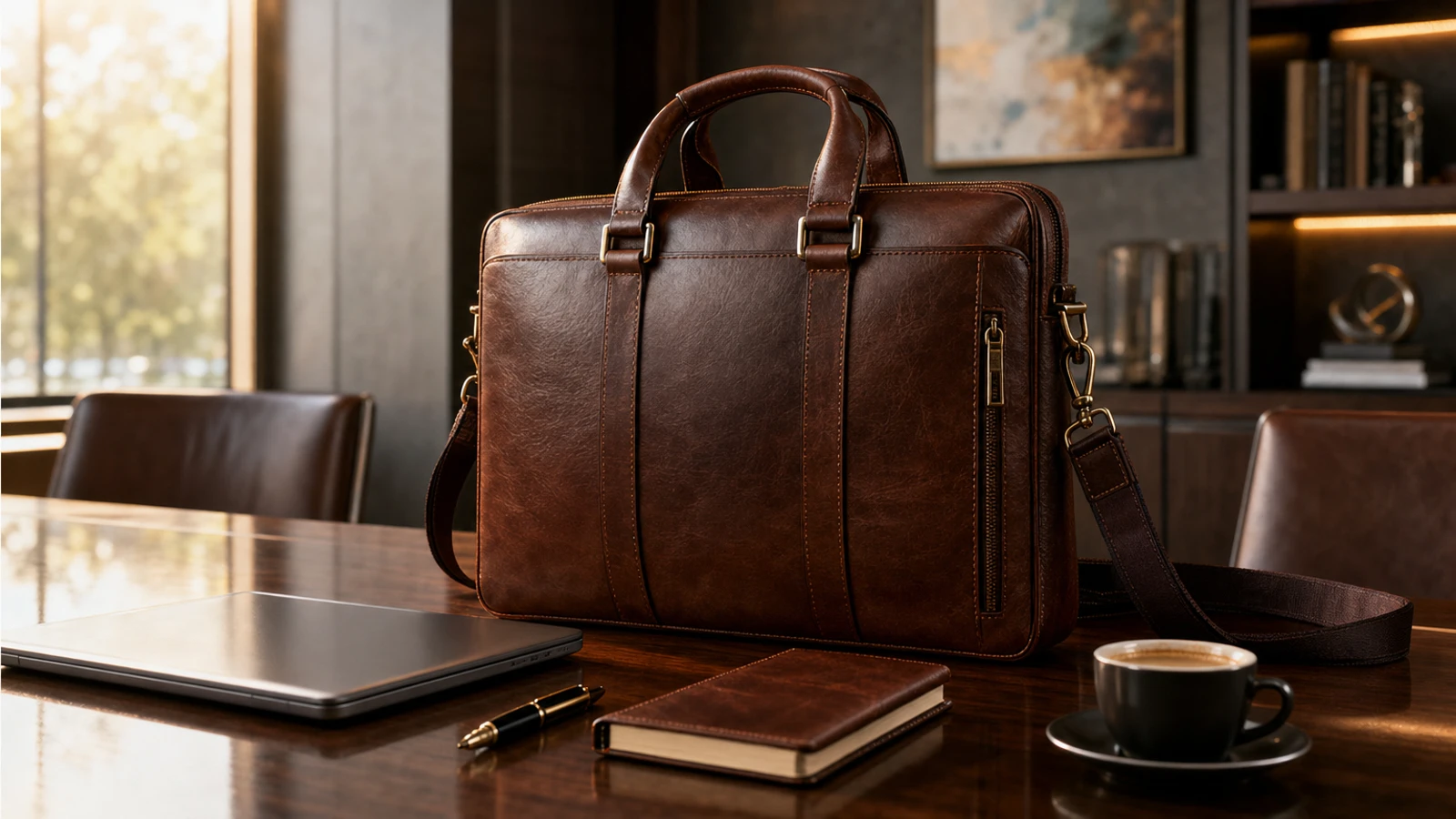
This support page focuses on care, patina, and longevity for a briefcase you keep for executive leather briefcases. The main shortlist covers product options; this page keeps the buying context clear and practical.
Care, Patina, and Longevity for a Briefcase You Keep
Longevity begins with expectations. Leather changes. Corners darken, handles soften, creases appear, and small marks become part of the object. If you want a bag to remain perfectly uniform, choose a finish known for consistency. If you enjoy character, choose leather that is meant to develop patina rather than resist every sign of use.
Care should be simple enough to repeat. A realistic routine is better than a perfect routine you will never follow. Wipe dust, let damp leather dry naturally, condition only when needed, and store the case away from heat. Follow the maker’s advice, especially for suede, nubuck, pull-up leather, or coated finishes.
Protect the shape. Do not leave a leather briefcase collapsed under a desk or overloaded in a car. Empty unnecessary items, store it upright, and avoid forcing the closure. Shape care is as important as surface care because a sagging executive bag loses polish even when the leather is expensive.
Plan for small repairs. Stitching, zipper pulls, strap pads, and hardware may need attention over years. A briefcase worth keeping should make those repairs plausible. Before buying, check whether the brand has service support or whether a local leather repair shop could reasonably work on the design.
Buy for the working life, not the unboxing. The most satisfying executive briefcase is one that feels useful after the first scratch. Choose materials, structure, and style you can maintain, then let the bag become part of your professional rhythm instead of a fragile display piece.
Practical decision notes
Executive scenario 1: Longevity begins with expectations. In a real buying conversation, this point deserves a second pass because leather changes. corners darken, handles soften, creases appear, and small marks become part of the object. if you want a bag to remain perfectly uniform, choose a finish known for consistency. if you enjoy character, choose leather that is meant to develop patina rather than resist every sign of use. Ask whether that detail still feels right after the briefcase is packed with a laptop, papers, charger, pen, phone, keys, and one personal item. If the answer depends on perfect conditions, keep comparing before treating the case as a long-term professional carry.
Inspection cue 1. For care, patina, and longevity for a briefcase you keep, look beyond the front product image and study the side profile, open interior, bottom edge, handle area, and closure behavior. A polished executive briefcase should make this specific detail easy to understand without guessing, because the bag will be opened, lifted, placed down, and repacked repeatedly during client-facing work.
Decision filter 1. Keep this question tied to the owner's actual routine: commute length, meeting formality, document sensitivity, device size, wardrobe color, travel frequency, and willingness to care for leather. The right answer is the one that still feels calm and useful after several ordinary workweeks, not only during the excitement of unboxing.
Executive scenario 2: Care should be simple enough to repeat. In a real buying conversation, this point deserves a second pass because a realistic routine is better than a perfect routine you will never follow. wipe dust, let damp leather dry naturally, condition only when needed, and store the case away from heat. follow the maker’s advice, especially for suede, nubuck, pull-up leather, or coated finishes. Ask whether that detail still feels right after the briefcase is packed with a laptop, papers, charger, pen, phone, keys, and one personal item. If the answer depends on perfect conditions, keep comparing before treating the case as a long-term professional carry.
Inspection cue 2. For care, patina, and longevity for a briefcase you keep, look beyond the front product image and study the side profile, open interior, bottom edge, handle area, and closure behavior. A polished executive briefcase should make this specific detail easy to understand without guessing, because the bag will be opened, lifted, placed down, and repacked repeatedly during client-facing work.
Decision filter 2. Keep this question tied to the owner's actual routine: commute length, meeting formality, document sensitivity, device size, wardrobe color, travel frequency, and willingness to care for leather. The right answer is the one that still feels calm and useful after several ordinary workweeks, not only during the excitement of unboxing.
Executive scenario 3: Protect the shape. In a real buying conversation, this point deserves a second pass because do not leave a leather briefcase collapsed under a desk or overloaded in a car. empty unnecessary items, store it upright, and avoid forcing the closure. shape care is as important as surface care because a sagging executive bag loses polish even when the leather is expensive. Ask whether that detail still feels right after the briefcase is packed with a laptop, papers, charger, pen, phone, keys, and one personal item. If the answer depends on perfect conditions, keep comparing before treating the case as a long-term professional carry.
Inspection cue 3. For care, patina, and longevity for a briefcase you keep, look beyond the front product image and study the side profile, open interior, bottom edge, handle area, and closure behavior. A polished executive briefcase should make this specific detail easy to understand without guessing, because the bag will be opened, lifted, placed down, and repacked repeatedly during client-facing work.
Decision filter 3. Keep this question tied to the owner's actual routine: commute length, meeting formality, document sensitivity, device size, wardrobe color, travel frequency, and willingness to care for leather. The right answer is the one that still feels calm and useful after several ordinary workweeks, not only during the excitement of unboxing.
Executive scenario 4: Plan for small repairs. In a real buying conversation, this point deserves a second pass because stitching, zipper pulls, strap pads, and hardware may need attention over years. a briefcase worth keeping should make those repairs plausible. before buying, check whether the brand has service support or whether a local leather repair shop could reasonably work on the design. Ask whether that detail still feels right after the briefcase is packed with a laptop, papers, charger, pen, phone, keys, and one personal item. If the answer depends on perfect conditions, keep comparing before treating the case as a long-term professional carry.
Inspection cue 4. For care, patina, and longevity for a briefcase you keep, look beyond the front product image and study the side profile, open interior, bottom edge, handle area, and closure behavior. A polished executive briefcase should make this specific detail easy to understand without guessing, because the bag will be opened, lifted, placed down, and repacked repeatedly during client-facing work.
Decision filter 4. Keep this question tied to the owner's actual routine: commute length, meeting formality, document sensitivity, device size, wardrobe color, travel frequency, and willingness to care for leather. The right answer is the one that still feels calm and useful after several ordinary workweeks, not only during the excitement of unboxing.
Executive scenario 5: Buy for the working life, not the unboxing. In a real buying conversation, this point deserves a second pass because the most satisfying executive briefcase is one that feels useful after the first scratch. choose materials, structure, and style you can maintain, then let the bag become part of your professional rhythm instead of a fragile display piece. Ask whether that detail still feels right after the briefcase is packed with a laptop, papers, charger, pen, phone, keys, and one personal item. If the answer depends on perfect conditions, keep comparing before treating the case as a long-term professional carry.
Inspection cue 5. For care, patina, and longevity for a briefcase you keep, look beyond the front product image and study the side profile, open interior, bottom edge, handle area, and closure behavior. A polished executive briefcase should make this specific detail easy to understand without guessing, because the bag will be opened, lifted, placed down, and repacked repeatedly during client-facing work.
Decision filter 5. Keep this question tied to the owner's actual routine: commute length, meeting formality, document sensitivity, device size, wardrobe color, travel frequency, and willingness to care for leather. The right answer is the one that still feels calm and useful after several ordinary workweeks, not only during the excitement of unboxing.
Use the hub and related support pages to compare leather briefcase details before choosing a professional work bag.