Start with LeStallion’s active shortlist for 7 Best Big and Tall Drafting Chairs. This GitHub Pages support guide adds practical context around capacity, seat dimensions, foot rings, back support, and high-desk stability before comparing individual products.
Weight Capacity, Frame Strength, and Tall-Seat Confidence
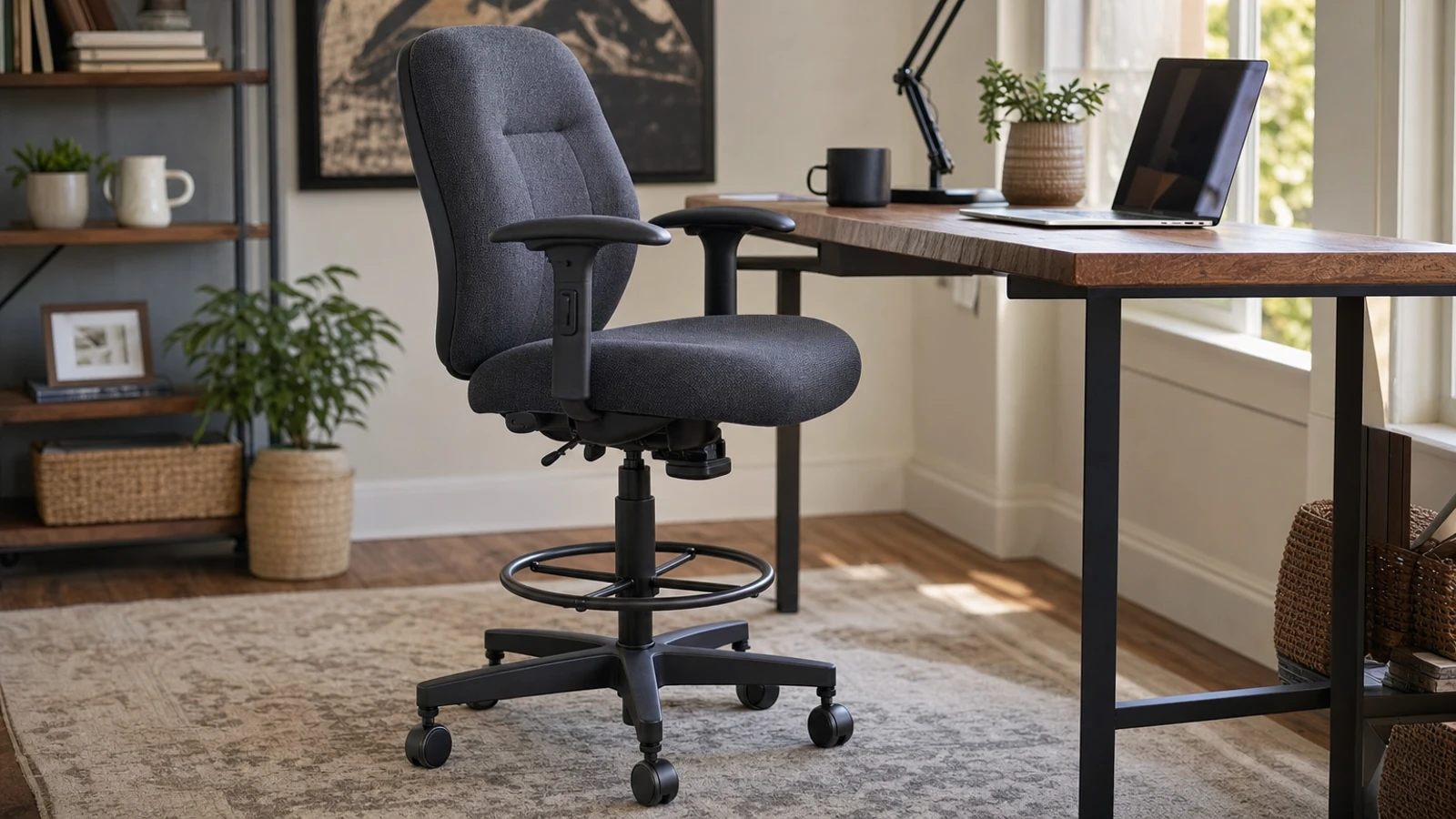
Capacity confidence. Big-and-tall drafting chairs should be judged by the whole support system, not one bold weight number. Frame design, cylinder quality, base width, casters, seat platform, and warranty language all shape long-term confidence. For weight capacity, frame strength, and tall-seat confidence, compare the chair during a real high-desk routine: sitting down, setting feet on the ring, working at counter height, reaching sideways, rolling back, and standing without the base feeling nervous.
Measure the work surface, seat-height range, foot-ring location, seat width, seat depth, arm clearance, caster path, and storage footprint. Big-and-tall fit is practical: the chair should feel roomy and steady without becoming too bulky for the desk area.
Seat dimensions. A wider seat is only helpful when depth, edge shape, padding firmness, and arm spacing also fit. Tall users often need more thigh support without pressure behind the knees. For weight capacity, frame strength, and tall-seat confidence, compare the chair during a real high-desk routine: sitting down, setting feet on the ring, working at counter height, reaching sideways, rolling back, and standing without the base feeling nervous.
Measure the work surface, seat-height range, foot-ring location, seat width, seat depth, arm clearance, caster path, and storage footprint. Big-and-tall fit is practical: the chair should feel roomy and steady without becoming too bulky for the desk area.
Foot-ring comfort. Because drafting chairs sit high, the foot ring becomes central to comfort. It should be reachable, stable, and positioned so legs do not dangle or press awkwardly during long work blocks. For weight capacity, frame strength, and tall-seat confidence, compare the chair during a real high-desk routine: sitting down, setting feet on the ring, working at counter height, reaching sideways, rolling back, and standing without the base feeling nervous.
Measure the work surface, seat-height range, foot-ring location, seat width, seat depth, arm clearance, caster path, and storage footprint. Big-and-tall fit is practical: the chair should feel roomy and steady without becoming too bulky for the desk area.
Back support. A big-and-tall drafting chair still has to support upright work at a high table or counter. Back height, lumbar shape, recline behavior, and shoulder freedom matter during typing, drawing, reception work, or lab tasks. For weight capacity, frame strength, and tall-seat confidence, compare the chair during a real high-desk routine: sitting down, setting feet on the ring, working at counter height, reaching sideways, rolling back, and standing without the base feeling nervous.
Measure the work surface, seat-height range, foot-ring location, seat width, seat depth, arm clearance, caster path, and storage footprint. Big-and-tall fit is practical: the chair should feel roomy and steady without becoming too bulky for the desk area.
Base stability. Tall seating changes leverage. A sturdy base, smooth casters, suitable floor match, and clear desk clearance help the chair feel predictable when the user sits down, rotates, or stands up. For weight capacity, frame strength, and tall-seat confidence, compare the chair during a real high-desk routine: sitting down, setting feet on the ring, working at counter height, reaching sideways, rolling back, and standing without the base feeling nervous.
Measure the work surface, seat-height range, foot-ring location, seat width, seat depth, arm clearance, caster path, and storage footprint. Big-and-tall fit is practical: the chair should feel roomy and steady without becoming too bulky for the desk area.
Buyer caution. This support guide is not medical advice and does not claim hands-on testing. Verify current measurements, weight ratings, return terms, and warranty coverage before choosing. For weight capacity, frame strength, and tall-seat confidence, compare the chair during a real high-desk routine: sitting down, setting feet on the ring, working at counter height, reaching sideways, rolling back, and standing without the base feeling nervous.
Measure the work surface, seat-height range, foot-ring location, seat width, seat depth, arm clearance, caster path, and storage footprint. Big-and-tall fit is practical: the chair should feel roomy and steady without becoming too bulky for the desk area.
Seat Width, Seat Depth, and Big-and-Tall Fit
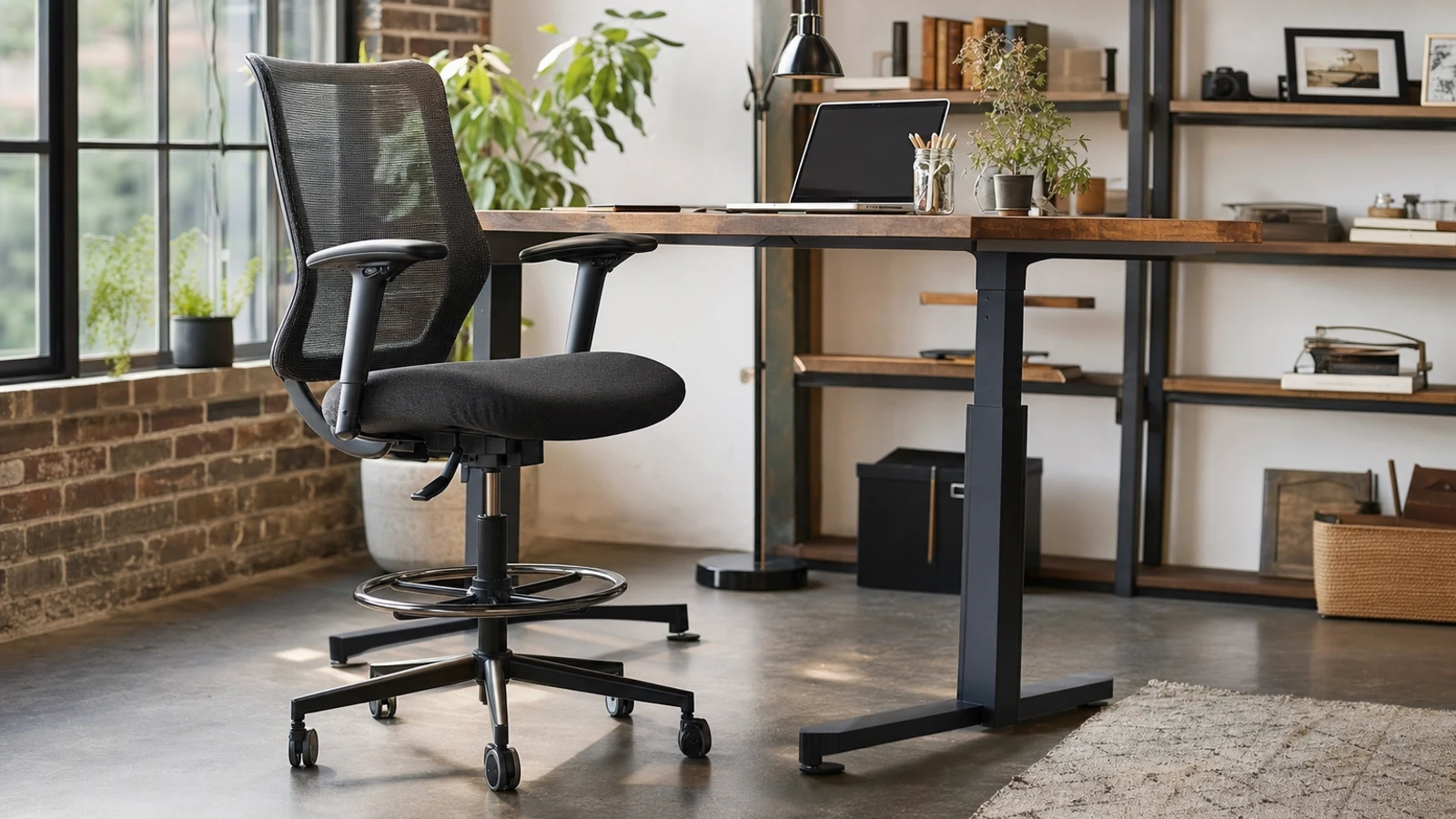
Capacity confidence. Big-and-tall drafting chairs should be judged by the whole support system, not one bold weight number. Frame design, cylinder quality, base width, casters, seat platform, and warranty language all shape long-term confidence. For seat width, seat depth, and big-and-tall fit, compare the chair during a real high-desk routine: sitting down, setting feet on the ring, working at counter height, reaching sideways, rolling back, and standing without the base feeling nervous.
Measure the work surface, seat-height range, foot-ring location, seat width, seat depth, arm clearance, caster path, and storage footprint. Big-and-tall fit is practical: the chair should feel roomy and steady without becoming too bulky for the desk area.
Seat dimensions. A wider seat is only helpful when depth, edge shape, padding firmness, and arm spacing also fit. Tall users often need more thigh support without pressure behind the knees. For seat width, seat depth, and big-and-tall fit, compare the chair during a real high-desk routine: sitting down, setting feet on the ring, working at counter height, reaching sideways, rolling back, and standing without the base feeling nervous.
Measure the work surface, seat-height range, foot-ring location, seat width, seat depth, arm clearance, caster path, and storage footprint. Big-and-tall fit is practical: the chair should feel roomy and steady without becoming too bulky for the desk area.
Foot-ring comfort. Because drafting chairs sit high, the foot ring becomes central to comfort. It should be reachable, stable, and positioned so legs do not dangle or press awkwardly during long work blocks. For seat width, seat depth, and big-and-tall fit, compare the chair during a real high-desk routine: sitting down, setting feet on the ring, working at counter height, reaching sideways, rolling back, and standing without the base feeling nervous.
Measure the work surface, seat-height range, foot-ring location, seat width, seat depth, arm clearance, caster path, and storage footprint. Big-and-tall fit is practical: the chair should feel roomy and steady without becoming too bulky for the desk area.
Back support. A big-and-tall drafting chair still has to support upright work at a high table or counter. Back height, lumbar shape, recline behavior, and shoulder freedom matter during typing, drawing, reception work, or lab tasks. For seat width, seat depth, and big-and-tall fit, compare the chair during a real high-desk routine: sitting down, setting feet on the ring, working at counter height, reaching sideways, rolling back, and standing without the base feeling nervous.
Measure the work surface, seat-height range, foot-ring location, seat width, seat depth, arm clearance, caster path, and storage footprint. Big-and-tall fit is practical: the chair should feel roomy and steady without becoming too bulky for the desk area.
Base stability. Tall seating changes leverage. A sturdy base, smooth casters, suitable floor match, and clear desk clearance help the chair feel predictable when the user sits down, rotates, or stands up. For seat width, seat depth, and big-and-tall fit, compare the chair during a real high-desk routine: sitting down, setting feet on the ring, working at counter height, reaching sideways, rolling back, and standing without the base feeling nervous.
Measure the work surface, seat-height range, foot-ring location, seat width, seat depth, arm clearance, caster path, and storage footprint. Big-and-tall fit is practical: the chair should feel roomy and steady without becoming too bulky for the desk area.
Buyer caution. This support guide is not medical advice and does not claim hands-on testing. Verify current measurements, weight ratings, return terms, and warranty coverage before choosing. For seat width, seat depth, and big-and-tall fit, compare the chair during a real high-desk routine: sitting down, setting feet on the ring, working at counter height, reaching sideways, rolling back, and standing without the base feeling nervous.
Measure the work surface, seat-height range, foot-ring location, seat width, seat depth, arm clearance, caster path, and storage footprint. Big-and-tall fit is practical: the chair should feel roomy and steady without becoming too bulky for the desk area.
Foot Ring Height, Leg Support, and Counter-Desk Comfort
Capacity confidence. Big-and-tall drafting chairs should be judged by the whole support system, not one bold weight number. Frame design, cylinder quality, base width, casters, seat platform, and warranty language all shape long-term confidence. For foot ring height, leg support, and counter-desk comfort, compare the chair during a real high-desk routine: sitting down, setting feet on the ring, working at counter height, reaching sideways, rolling back, and standing without the base feeling nervous.
Measure the work surface, seat-height range, foot-ring location, seat width, seat depth, arm clearance, caster path, and storage footprint. Big-and-tall fit is practical: the chair should feel roomy and steady without becoming too bulky for the desk area.
Seat dimensions. A wider seat is only helpful when depth, edge shape, padding firmness, and arm spacing also fit. Tall users often need more thigh support without pressure behind the knees. For foot ring height, leg support, and counter-desk comfort, compare the chair during a real high-desk routine: sitting down, setting feet on the ring, working at counter height, reaching sideways, rolling back, and standing without the base feeling nervous.
Measure the work surface, seat-height range, foot-ring location, seat width, seat depth, arm clearance, caster path, and storage footprint. Big-and-tall fit is practical: the chair should feel roomy and steady without becoming too bulky for the desk area.
Foot-ring comfort. Because drafting chairs sit high, the foot ring becomes central to comfort. It should be reachable, stable, and positioned so legs do not dangle or press awkwardly during long work blocks. For foot ring height, leg support, and counter-desk comfort, compare the chair during a real high-desk routine: sitting down, setting feet on the ring, working at counter height, reaching sideways, rolling back, and standing without the base feeling nervous.
Measure the work surface, seat-height range, foot-ring location, seat width, seat depth, arm clearance, caster path, and storage footprint. Big-and-tall fit is practical: the chair should feel roomy and steady without becoming too bulky for the desk area.
Back support. A big-and-tall drafting chair still has to support upright work at a high table or counter. Back height, lumbar shape, recline behavior, and shoulder freedom matter during typing, drawing, reception work, or lab tasks. For foot ring height, leg support, and counter-desk comfort, compare the chair during a real high-desk routine: sitting down, setting feet on the ring, working at counter height, reaching sideways, rolling back, and standing without the base feeling nervous.
Measure the work surface, seat-height range, foot-ring location, seat width, seat depth, arm clearance, caster path, and storage footprint. Big-and-tall fit is practical: the chair should feel roomy and steady without becoming too bulky for the desk area.
Base stability. Tall seating changes leverage. A sturdy base, smooth casters, suitable floor match, and clear desk clearance help the chair feel predictable when the user sits down, rotates, or stands up. For foot ring height, leg support, and counter-desk comfort, compare the chair during a real high-desk routine: sitting down, setting feet on the ring, working at counter height, reaching sideways, rolling back, and standing without the base feeling nervous.
Measure the work surface, seat-height range, foot-ring location, seat width, seat depth, arm clearance, caster path, and storage footprint. Big-and-tall fit is practical: the chair should feel roomy and steady without becoming too bulky for the desk area.
Buyer caution. This support guide is not medical advice and does not claim hands-on testing. Verify current measurements, weight ratings, return terms, and warranty coverage before choosing. For foot ring height, leg support, and counter-desk comfort, compare the chair during a real high-desk routine: sitting down, setting feet on the ring, working at counter height, reaching sideways, rolling back, and standing without the base feeling nervous.
Measure the work surface, seat-height range, foot-ring location, seat width, seat depth, arm clearance, caster path, and storage footprint. Big-and-tall fit is practical: the chair should feel roomy and steady without becoming too bulky for the desk area.
Back Support, Lumbar Shape, and Upright Work
Capacity confidence. Big-and-tall drafting chairs should be judged by the whole support system, not one bold weight number. Frame design, cylinder quality, base width, casters, seat platform, and warranty language all shape long-term confidence. For back support, lumbar shape, and upright work, compare the chair during a real high-desk routine: sitting down, setting feet on the ring, working at counter height, reaching sideways, rolling back, and standing without the base feeling nervous.
Measure the work surface, seat-height range, foot-ring location, seat width, seat depth, arm clearance, caster path, and storage footprint. Big-and-tall fit is practical: the chair should feel roomy and steady without becoming too bulky for the desk area.
Seat dimensions. A wider seat is only helpful when depth, edge shape, padding firmness, and arm spacing also fit. Tall users often need more thigh support without pressure behind the knees. For back support, lumbar shape, and upright work, compare the chair during a real high-desk routine: sitting down, setting feet on the ring, working at counter height, reaching sideways, rolling back, and standing without the base feeling nervous.
Measure the work surface, seat-height range, foot-ring location, seat width, seat depth, arm clearance, caster path, and storage footprint. Big-and-tall fit is practical: the chair should feel roomy and steady without becoming too bulky for the desk area.
Foot-ring comfort. Because drafting chairs sit high, the foot ring becomes central to comfort. It should be reachable, stable, and positioned so legs do not dangle or press awkwardly during long work blocks. For back support, lumbar shape, and upright work, compare the chair during a real high-desk routine: sitting down, setting feet on the ring, working at counter height, reaching sideways, rolling back, and standing without the base feeling nervous.
Measure the work surface, seat-height range, foot-ring location, seat width, seat depth, arm clearance, caster path, and storage footprint. Big-and-tall fit is practical: the chair should feel roomy and steady without becoming too bulky for the desk area.
Back support. A big-and-tall drafting chair still has to support upright work at a high table or counter. Back height, lumbar shape, recline behavior, and shoulder freedom matter during typing, drawing, reception work, or lab tasks. For back support, lumbar shape, and upright work, compare the chair during a real high-desk routine: sitting down, setting feet on the ring, working at counter height, reaching sideways, rolling back, and standing without the base feeling nervous.
Measure the work surface, seat-height range, foot-ring location, seat width, seat depth, arm clearance, caster path, and storage footprint. Big-and-tall fit is practical: the chair should feel roomy and steady without becoming too bulky for the desk area.
Base stability. Tall seating changes leverage. A sturdy base, smooth casters, suitable floor match, and clear desk clearance help the chair feel predictable when the user sits down, rotates, or stands up. For back support, lumbar shape, and upright work, compare the chair during a real high-desk routine: sitting down, setting feet on the ring, working at counter height, reaching sideways, rolling back, and standing without the base feeling nervous.
Measure the work surface, seat-height range, foot-ring location, seat width, seat depth, arm clearance, caster path, and storage footprint. Big-and-tall fit is practical: the chair should feel roomy and steady without becoming too bulky for the desk area.
Buyer caution. This support guide is not medical advice and does not claim hands-on testing. Verify current measurements, weight ratings, return terms, and warranty coverage before choosing. For back support, lumbar shape, and upright work, compare the chair during a real high-desk routine: sitting down, setting feet on the ring, working at counter height, reaching sideways, rolling back, and standing without the base feeling nervous.
Measure the work surface, seat-height range, foot-ring location, seat width, seat depth, arm clearance, caster path, and storage footprint. Big-and-tall fit is practical: the chair should feel roomy and steady without becoming too bulky for the desk area.
Base Stability, Casters, and Tall-Chair Safety
Capacity confidence. Big-and-tall drafting chairs should be judged by the whole support system, not one bold weight number. Frame design, cylinder quality, base width, casters, seat platform, and warranty language all shape long-term confidence. For base stability, casters, and tall-chair safety, compare the chair during a real high-desk routine: sitting down, setting feet on the ring, working at counter height, reaching sideways, rolling back, and standing without the base feeling nervous.
Measure the work surface, seat-height range, foot-ring location, seat width, seat depth, arm clearance, caster path, and storage footprint. Big-and-tall fit is practical: the chair should feel roomy and steady without becoming too bulky for the desk area.
Seat dimensions. A wider seat is only helpful when depth, edge shape, padding firmness, and arm spacing also fit. Tall users often need more thigh support without pressure behind the knees. For base stability, casters, and tall-chair safety, compare the chair during a real high-desk routine: sitting down, setting feet on the ring, working at counter height, reaching sideways, rolling back, and standing without the base feeling nervous.
Measure the work surface, seat-height range, foot-ring location, seat width, seat depth, arm clearance, caster path, and storage footprint. Big-and-tall fit is practical: the chair should feel roomy and steady without becoming too bulky for the desk area.
Foot-ring comfort. Because drafting chairs sit high, the foot ring becomes central to comfort. It should be reachable, stable, and positioned so legs do not dangle or press awkwardly during long work blocks. For base stability, casters, and tall-chair safety, compare the chair during a real high-desk routine: sitting down, setting feet on the ring, working at counter height, reaching sideways, rolling back, and standing without the base feeling nervous.
Measure the work surface, seat-height range, foot-ring location, seat width, seat depth, arm clearance, caster path, and storage footprint. Big-and-tall fit is practical: the chair should feel roomy and steady without becoming too bulky for the desk area.
Back support. A big-and-tall drafting chair still has to support upright work at a high table or counter. Back height, lumbar shape, recline behavior, and shoulder freedom matter during typing, drawing, reception work, or lab tasks. For base stability, casters, and tall-chair safety, compare the chair during a real high-desk routine: sitting down, setting feet on the ring, working at counter height, reaching sideways, rolling back, and standing without the base feeling nervous.
Measure the work surface, seat-height range, foot-ring location, seat width, seat depth, arm clearance, caster path, and storage footprint. Big-and-tall fit is practical: the chair should feel roomy and steady without becoming too bulky for the desk area.
Base stability. Tall seating changes leverage. A sturdy base, smooth casters, suitable floor match, and clear desk clearance help the chair feel predictable when the user sits down, rotates, or stands up. For base stability, casters, and tall-chair safety, compare the chair during a real high-desk routine: sitting down, setting feet on the ring, working at counter height, reaching sideways, rolling back, and standing without the base feeling nervous.
Measure the work surface, seat-height range, foot-ring location, seat width, seat depth, arm clearance, caster path, and storage footprint. Big-and-tall fit is practical: the chair should feel roomy and steady without becoming too bulky for the desk area.
Buyer caution. This support guide is not medical advice and does not claim hands-on testing. Verify current measurements, weight ratings, return terms, and warranty coverage before choosing. For base stability, casters, and tall-chair safety, compare the chair during a real high-desk routine: sitting down, setting feet on the ring, working at counter height, reaching sideways, rolling back, and standing without the base feeling nervous.
Measure the work surface, seat-height range, foot-ring location, seat width, seat depth, arm clearance, caster path, and storage footprint. Big-and-tall fit is practical: the chair should feel roomy and steady without becoming too bulky for the desk area.
Big and Tall Drafting Chair Buying Checklist
Capacity confidence. Big-and-tall drafting chairs should be judged by the whole support system, not one bold weight number. Frame design, cylinder quality, base width, casters, seat platform, and warranty language all shape long-term confidence. For big and tall drafting chair buying checklist, compare the chair during a real high-desk routine: sitting down, setting feet on the ring, working at counter height, reaching sideways, rolling back, and standing without the base feeling nervous.
Measure the work surface, seat-height range, foot-ring location, seat width, seat depth, arm clearance, caster path, and storage footprint. Big-and-tall fit is practical: the chair should feel roomy and steady without becoming too bulky for the desk area.
Seat dimensions. A wider seat is only helpful when depth, edge shape, padding firmness, and arm spacing also fit. Tall users often need more thigh support without pressure behind the knees. For big and tall drafting chair buying checklist, compare the chair during a real high-desk routine: sitting down, setting feet on the ring, working at counter height, reaching sideways, rolling back, and standing without the base feeling nervous.
Measure the work surface, seat-height range, foot-ring location, seat width, seat depth, arm clearance, caster path, and storage footprint. Big-and-tall fit is practical: the chair should feel roomy and steady without becoming too bulky for the desk area.
Foot-ring comfort. Because drafting chairs sit high, the foot ring becomes central to comfort. It should be reachable, stable, and positioned so legs do not dangle or press awkwardly during long work blocks. For big and tall drafting chair buying checklist, compare the chair during a real high-desk routine: sitting down, setting feet on the ring, working at counter height, reaching sideways, rolling back, and standing without the base feeling nervous.
Measure the work surface, seat-height range, foot-ring location, seat width, seat depth, arm clearance, caster path, and storage footprint. Big-and-tall fit is practical: the chair should feel roomy and steady without becoming too bulky for the desk area.
Back support. A big-and-tall drafting chair still has to support upright work at a high table or counter. Back height, lumbar shape, recline behavior, and shoulder freedom matter during typing, drawing, reception work, or lab tasks. For big and tall drafting chair buying checklist, compare the chair during a real high-desk routine: sitting down, setting feet on the ring, working at counter height, reaching sideways, rolling back, and standing without the base feeling nervous.
Measure the work surface, seat-height range, foot-ring location, seat width, seat depth, arm clearance, caster path, and storage footprint. Big-and-tall fit is practical: the chair should feel roomy and steady without becoming too bulky for the desk area.
Base stability. Tall seating changes leverage. A sturdy base, smooth casters, suitable floor match, and clear desk clearance help the chair feel predictable when the user sits down, rotates, or stands up. For big and tall drafting chair buying checklist, compare the chair during a real high-desk routine: sitting down, setting feet on the ring, working at counter height, reaching sideways, rolling back, and standing without the base feeling nervous.
Measure the work surface, seat-height range, foot-ring location, seat width, seat depth, arm clearance, caster path, and storage footprint. Big-and-tall fit is practical: the chair should feel roomy and steady without becoming too bulky for the desk area.
Buyer caution. This support guide is not medical advice and does not claim hands-on testing. Verify current measurements, weight ratings, return terms, and warranty coverage before choosing. For big and tall drafting chair buying checklist, compare the chair during a real high-desk routine: sitting down, setting feet on the ring, working at counter height, reaching sideways, rolling back, and standing without the base feeling nervous.
Measure the work surface, seat-height range, foot-ring location, seat width, seat depth, arm clearance, caster path, and storage footprint. Big-and-tall fit is practical: the chair should feel roomy and steady without becoming too bulky for the desk area.
Compare big-and-tall drafting chairs after measuring the station
Once capacity needs, seat dimensions, foot-ring position, and base clearance make sense, review the active product shortlist in 7 Best Big and Tall Drafting Chairs.
Final big-and-tall drafting chair fit check
Before buying, compare weight rating, seat width, seat depth, height range, foot ring comfort, base stability, arm clearance, materials, warranty, and return policy. This GitHub Pages guide follows the previous Render support page on office drafting chairs.